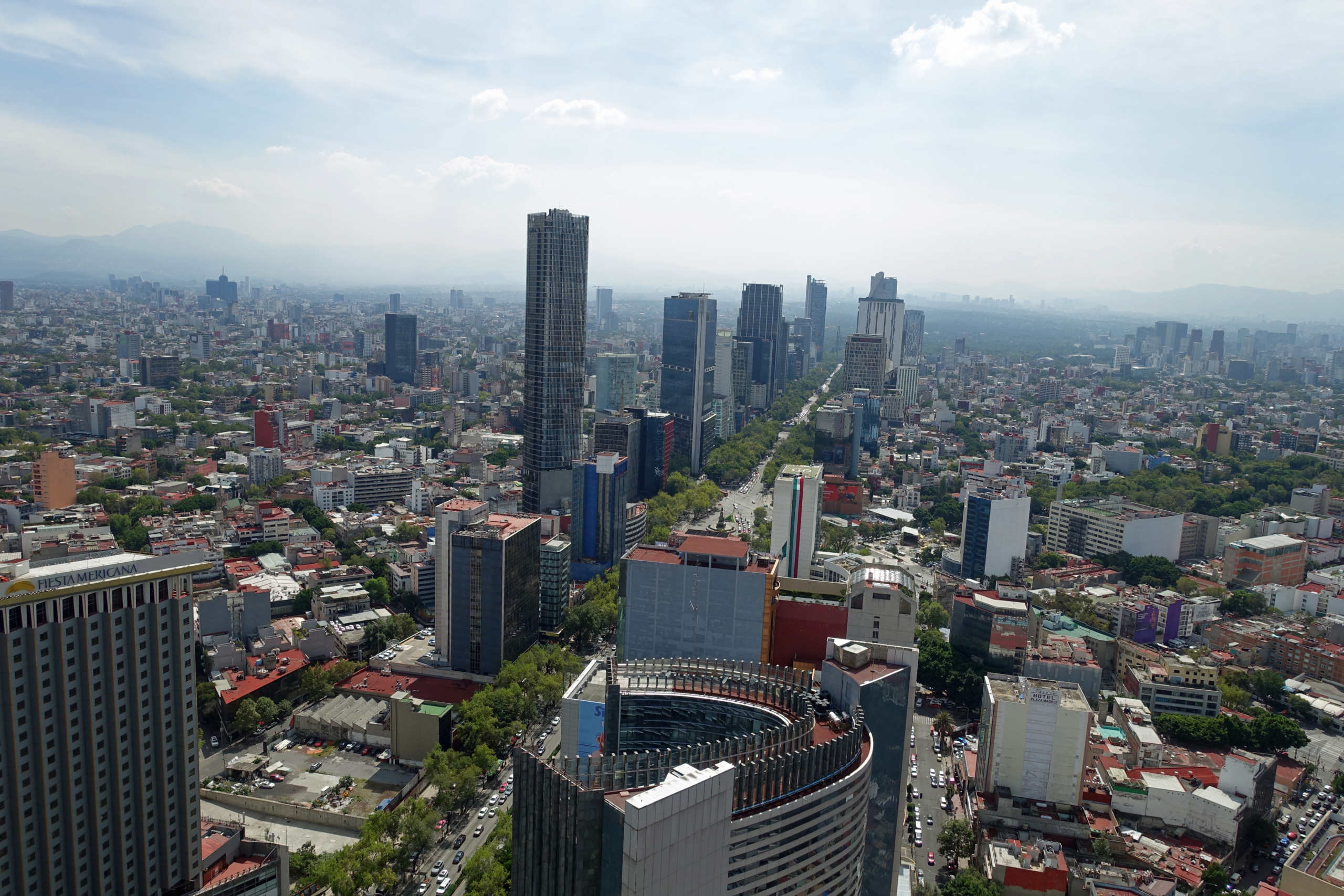
And we’re off our on South American adventures! The first stop on our way was Mexico City. Neither of us has been here before and it was the best non-stop flight we could find from Calgary that did not take us into the US. We have heard from a number of nomad friends over the years how much they enjoy the city and this is a good opportunity to see for ourselves.
Perched 7,350 feet (2,240 meters) high in a valley ringed by mountains, Mexico City is the most populous metropolitan area in North America, home to over 22 million people. Founded in 1325 as the Aztec capital of Tenochtitlan and built over a dry lakebed, the city has a deep history and a vibrant modern energy. There are over 180 museums, stunning architecture and a legendary culinary scene. Something for every traveler!
We rented an apartment in the BeGrand Reforma tower on the 41st floor with views of the city, and within walking distance of the historic city center. Arriving at our apartment at 2am we kept our first day in the city fairly quiet, picking up groceries, exploring the pool and gym in our building and having lunch at a nearby restaurant. We have quite a few places on our list to visit, and more got added during our stay, so having a lazy first day was nice. We saw and did much more than we anticipated so to keep the length reasonable I’m going to make this post all about the historic city center and do a second post about the other areas we visited.
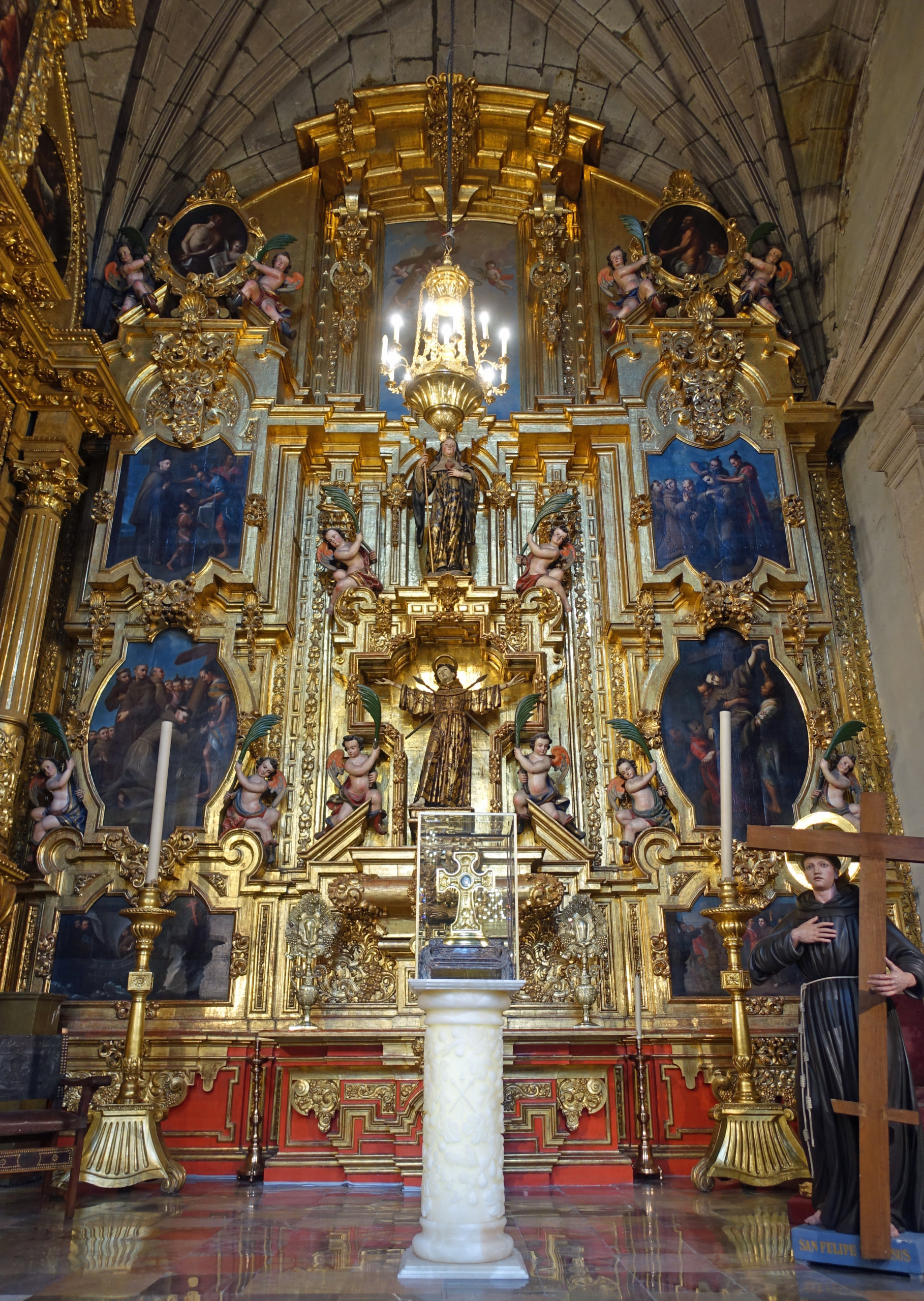
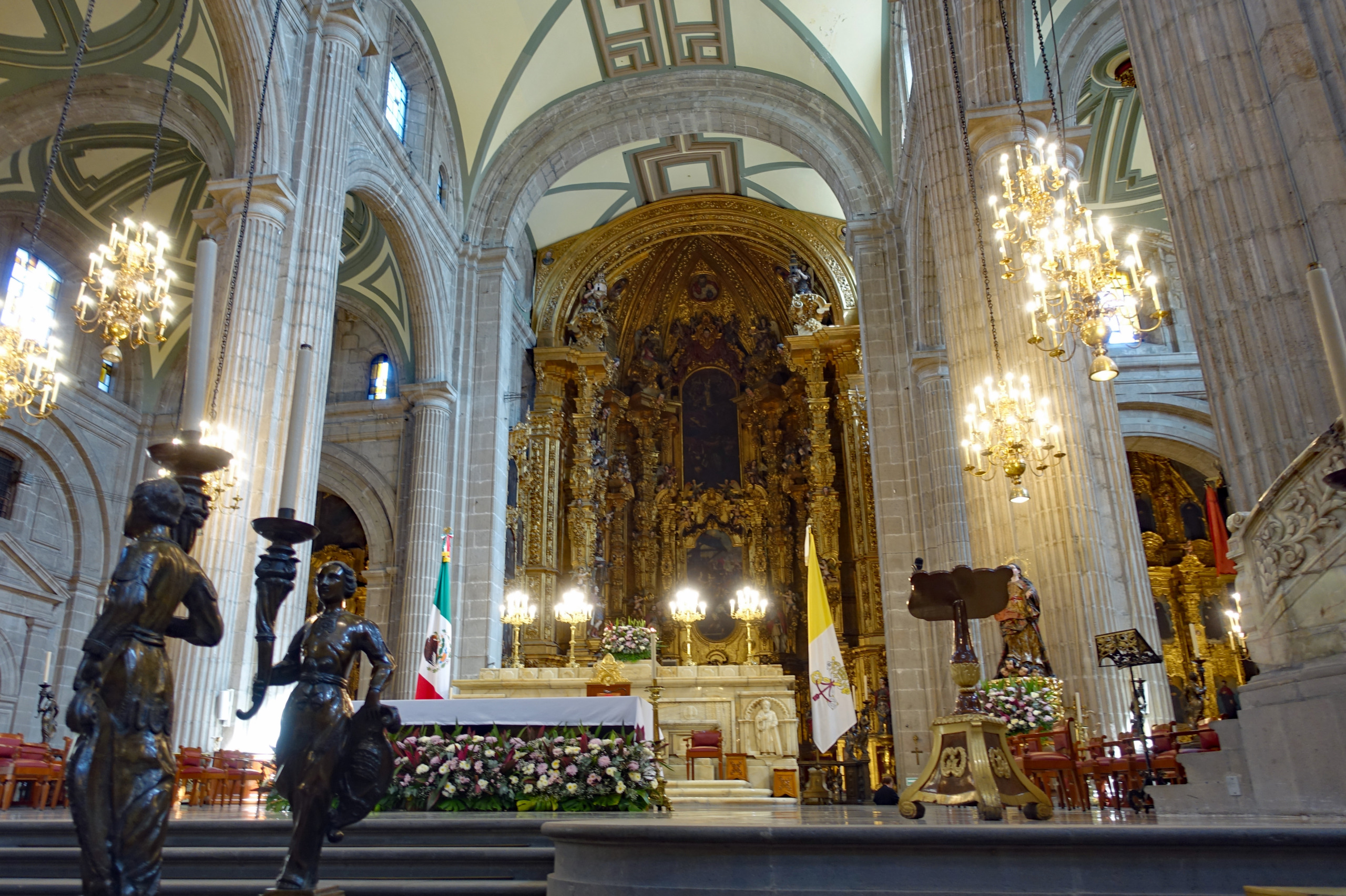
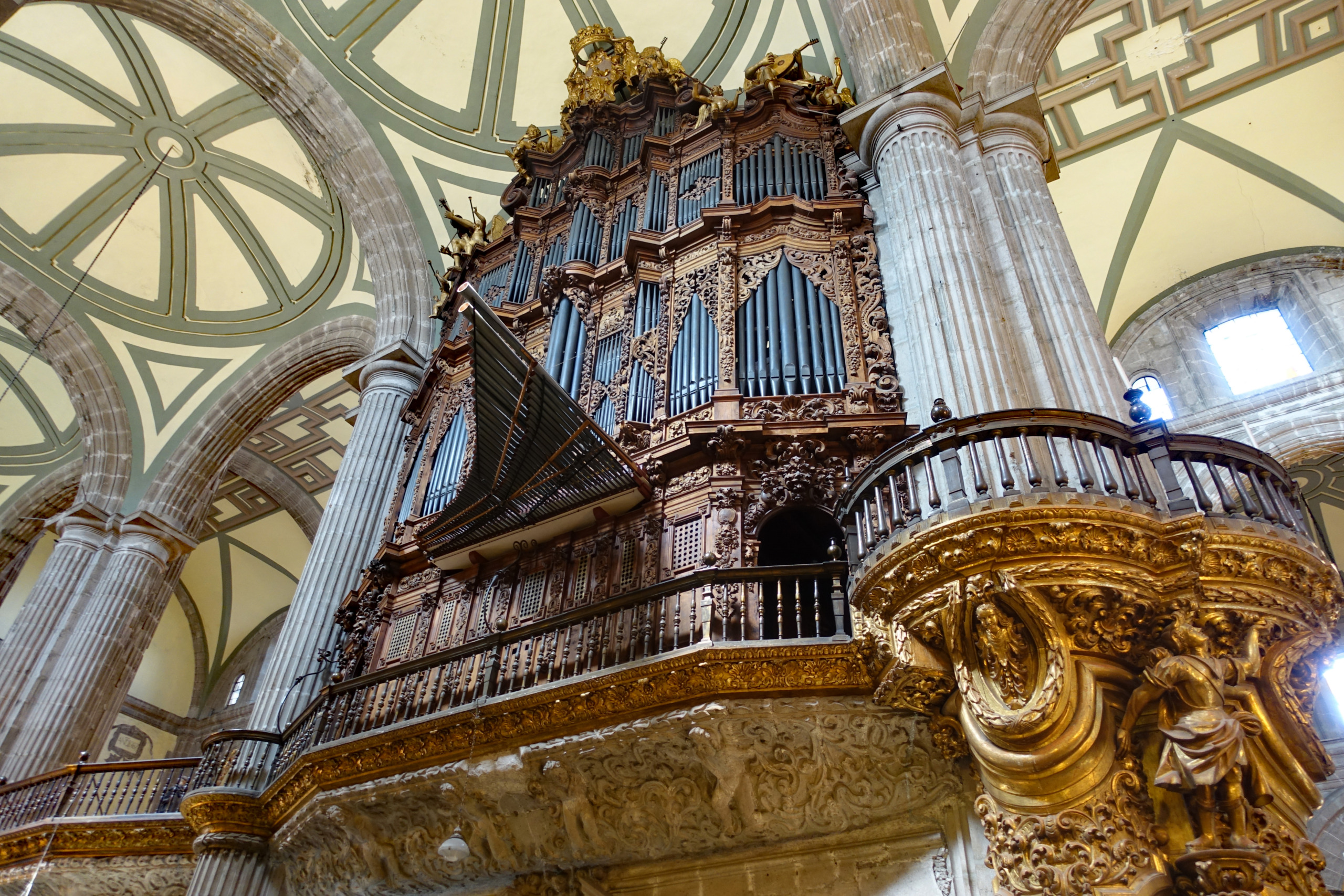
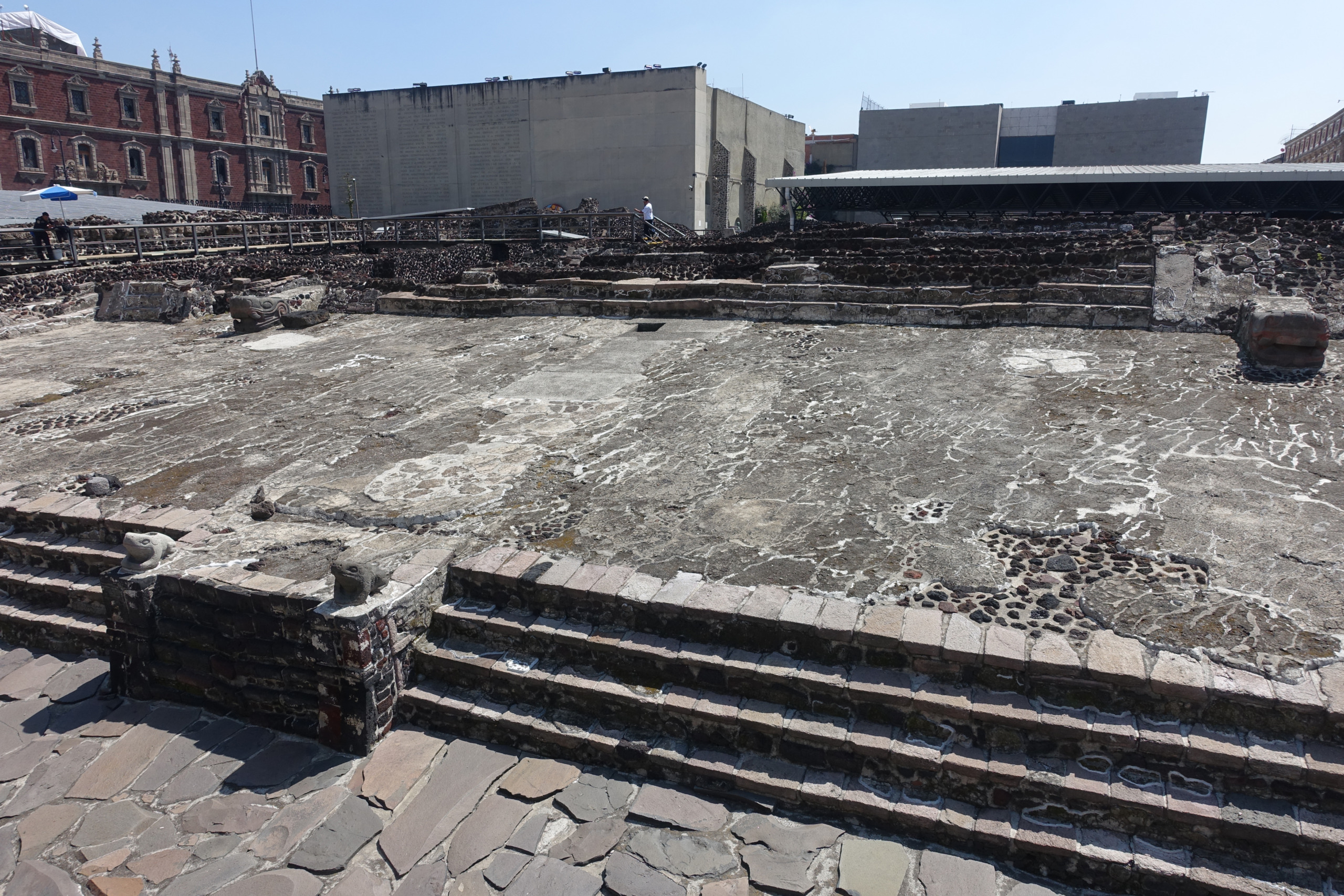
The first thing we did after our arrival was sign up for a free walking tour with Kactus Tours. The 2.5 hour tour took us to the major sites in the city center, a few of which we returned to for a more in depth look. The tour meeting place was in front of Mexico City Metropolitan Cathedral, one of the most prominent historic and architectural landmarks in the Americas. Standing at the northern edge of the historic Zócalo plaza, it serves as the seat of the Roman Catholic Archdiocese of Mexico. Construction began in 1573 under Spanish rule and spanned nearly three centuries, concluding around 1813. Because of this extended timeframe, the building seamlessly incorporates a blend of Renaissance, Baroque, Neoclassical, and Churrigueresque architectural styles. The cathedral was constructed directly atop the sacred precinct of the former Aztec capital of Tenochtitlan, utilizing stone salvaged from the demolished Aztec temples. The interior features 16 distinct side chapels, two massive 18th-century pipe organs, and the renowned Altar of the Kings, known for its intricate gilded wood carvings. Built on the soft clay bed of the former Lake Texcoco, the massive cathedral experienced centuries of uneven sinking and tilt. Extensive engineering projects in the late 1990s and early 2000s stabilized the foundation and leveled the complex. (click on any photo to enlarge)
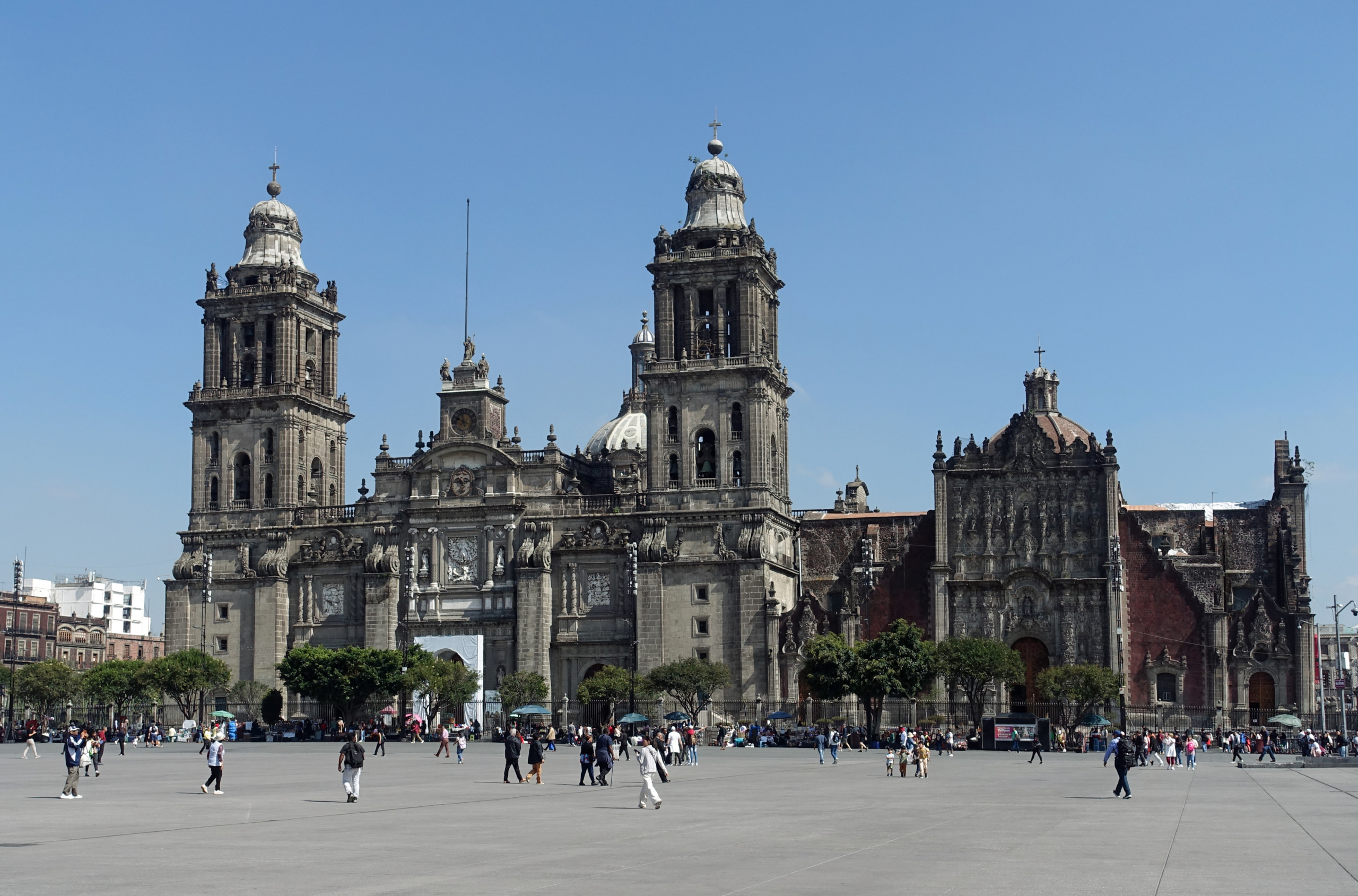
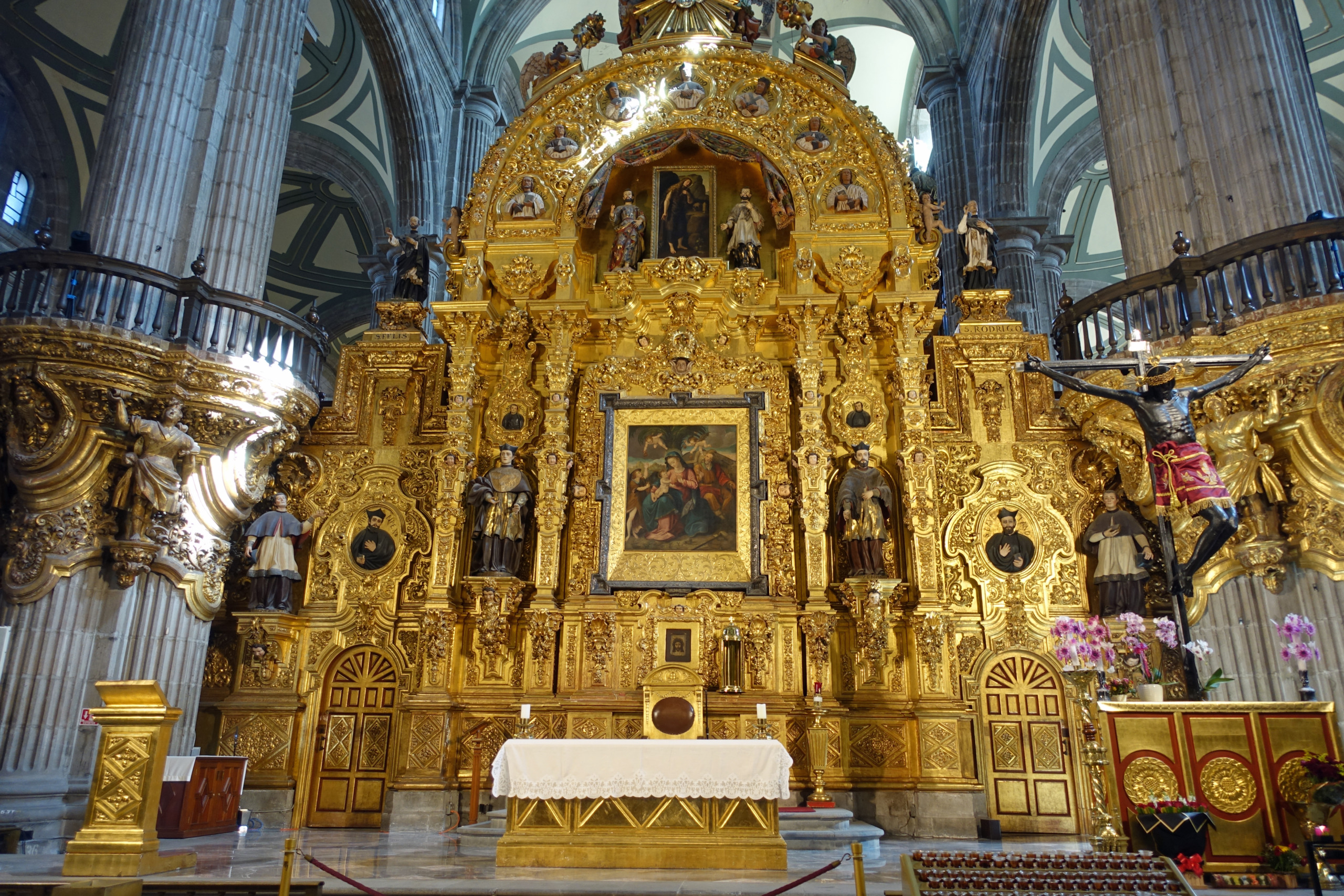
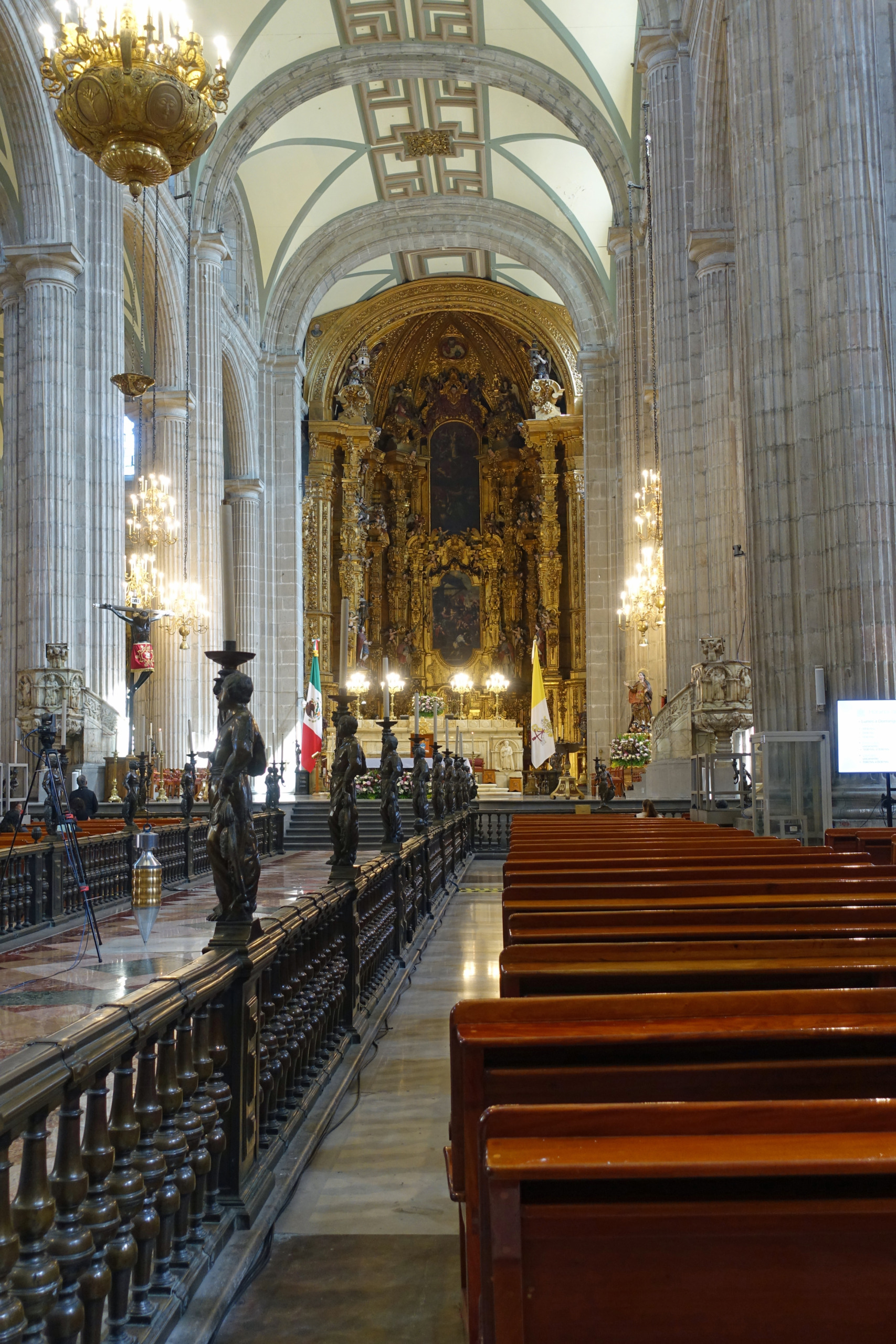
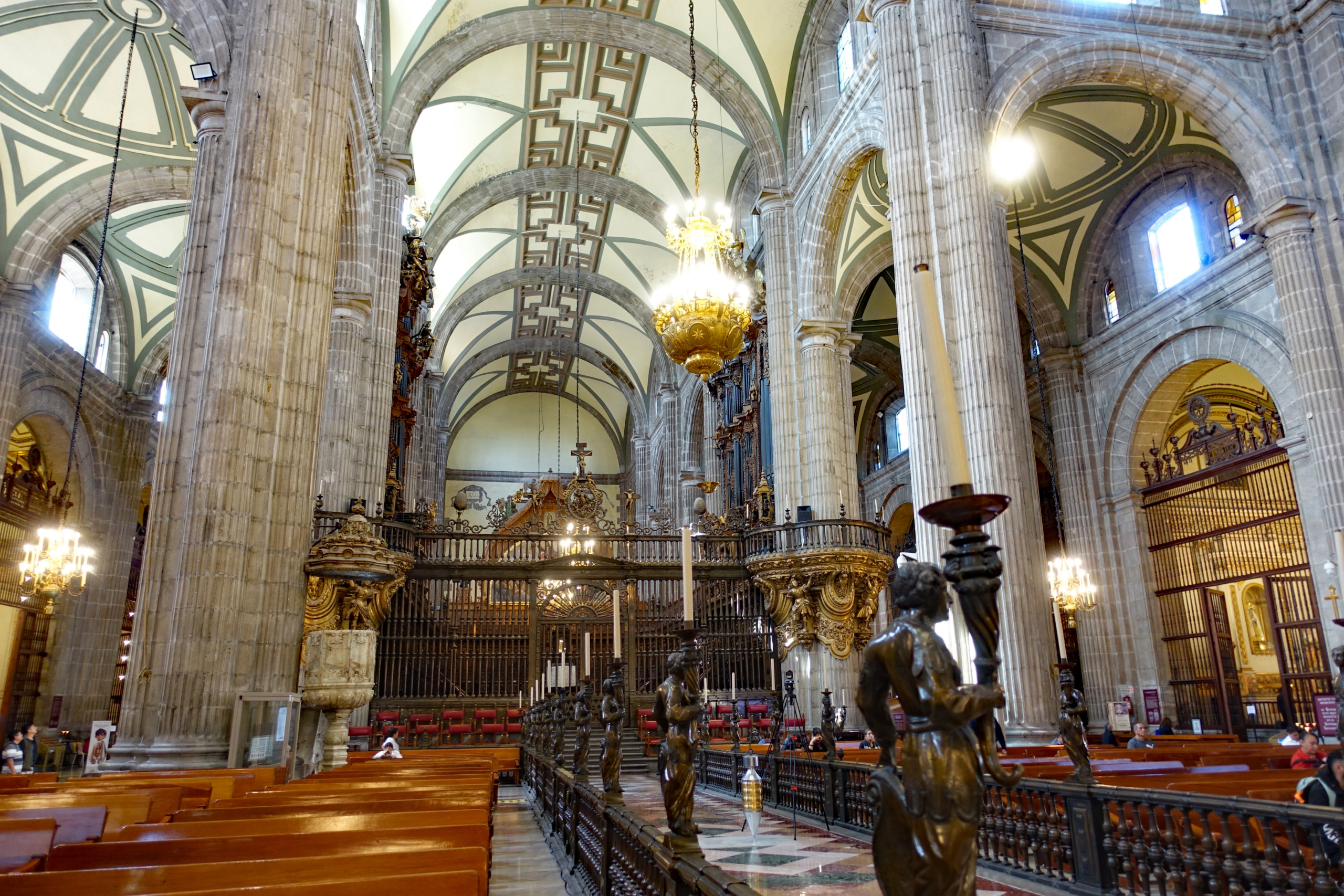
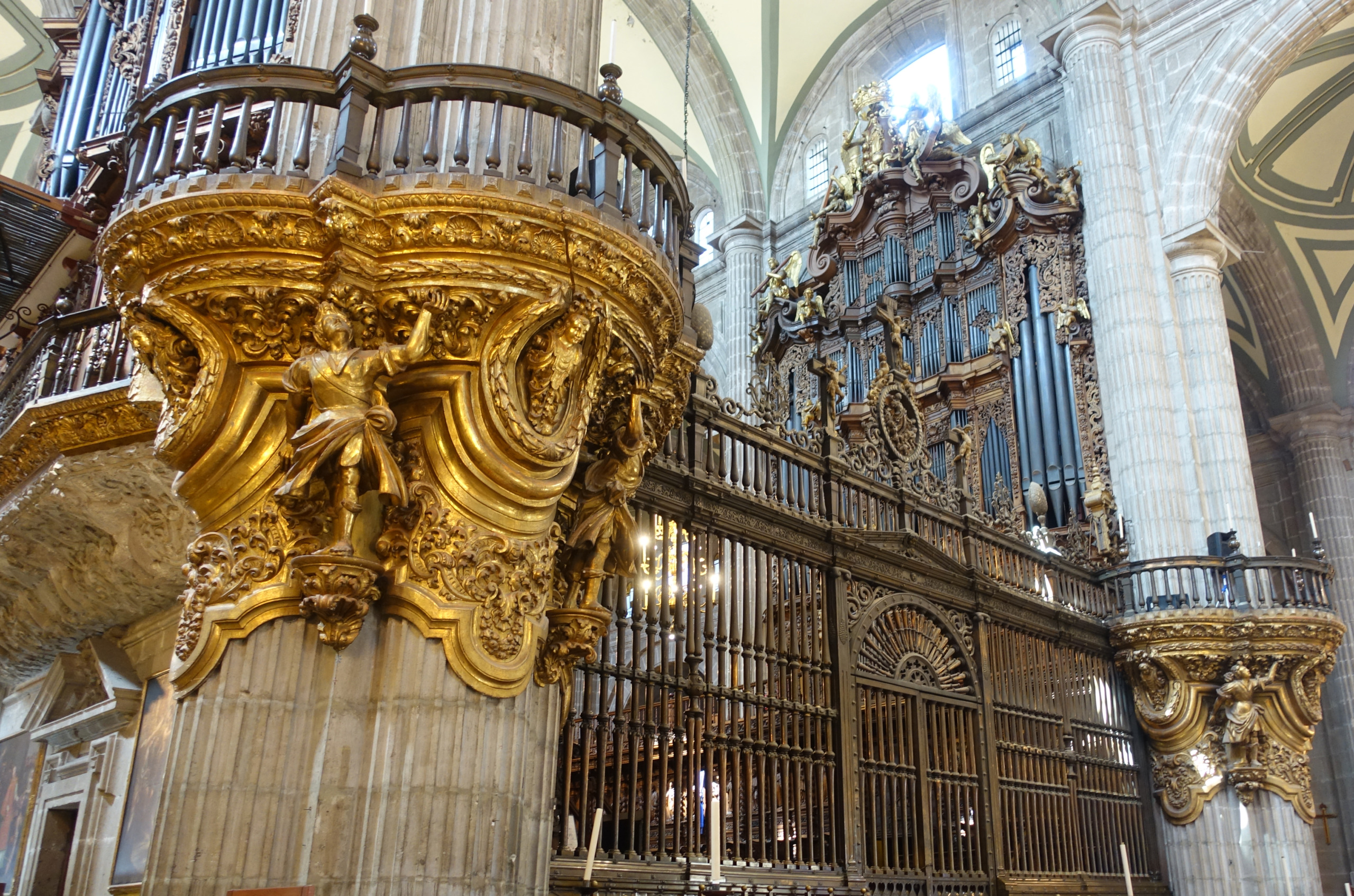
The cathedral dominates the northern edge of Constitution Plaza, commonly known as the Zócalo. This massive central square is one of the largest public plazas in the world. Measuring over 57,000 square meters, it serves as the political, historical, and cultural heart of Mexico. At the center of the open paved plaza stands a colossal flagpole where the Mexican flag is raised and lowered daily by the the armed forces.
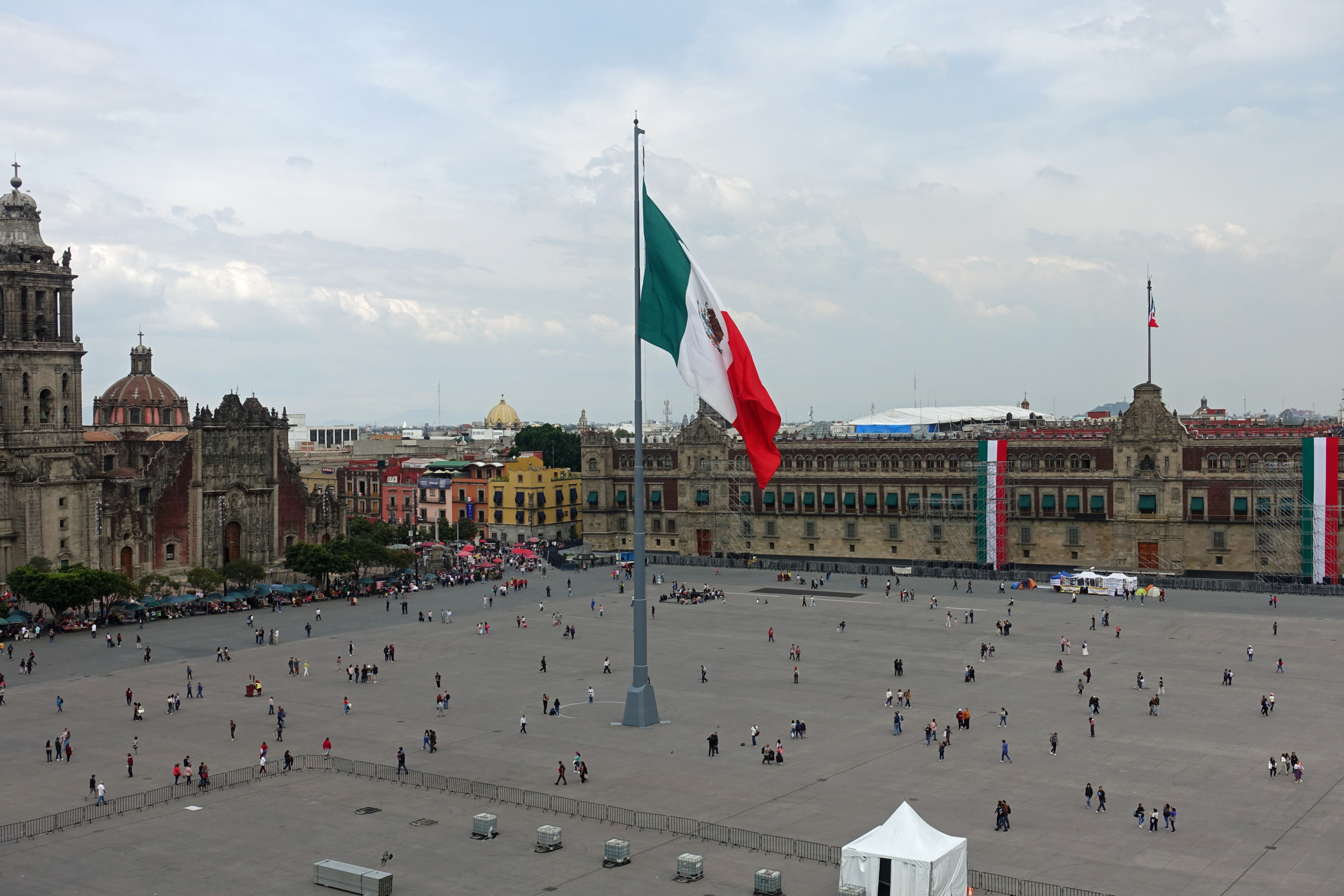
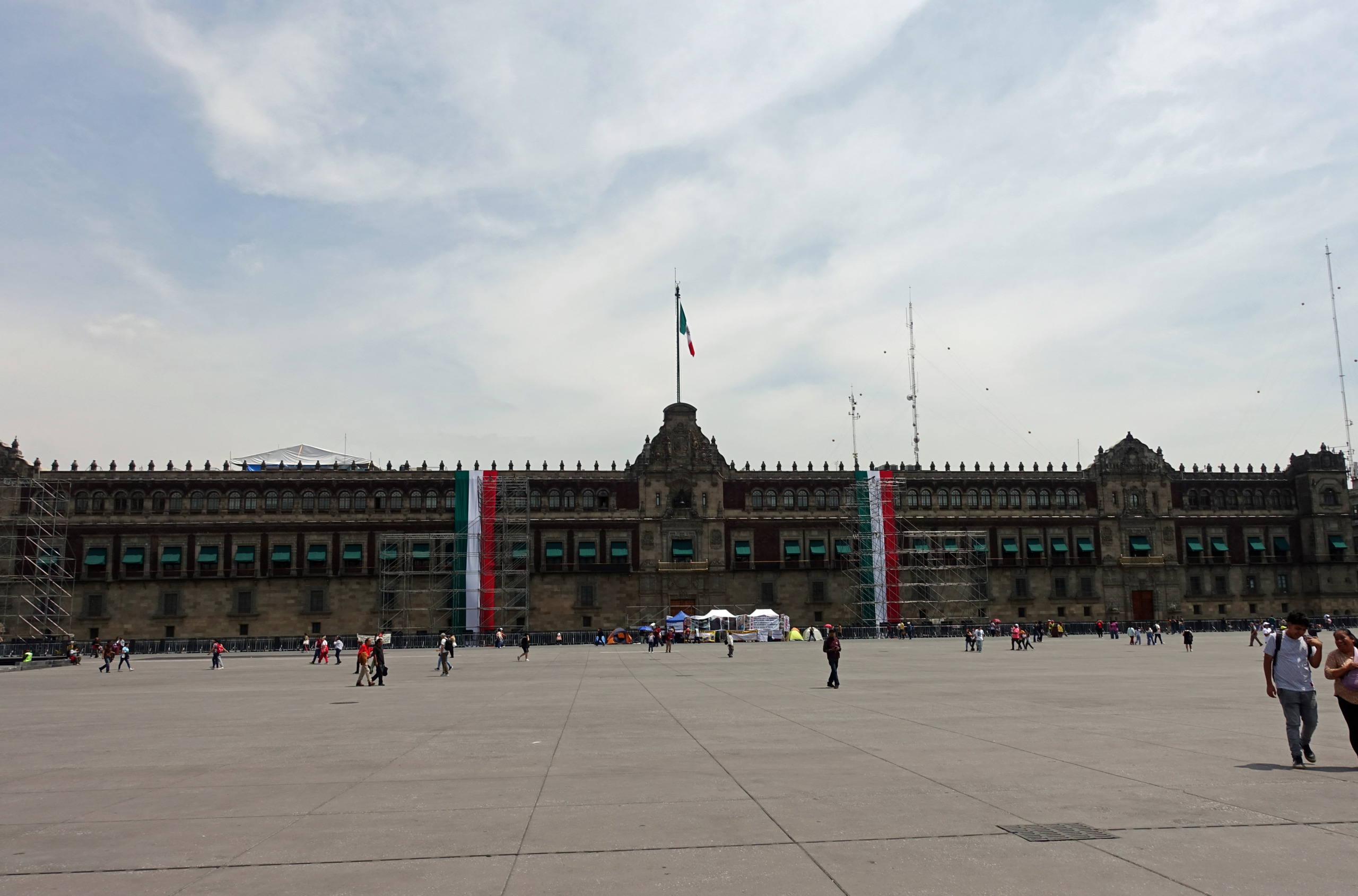
The National Palace spanning the entire eastern side of the plaza, is the seat of the federal government and home to the president. Suspended directly above the main central entrance balcony overlooking the Zócalo is the original bell rung by Father Miguel Hidalgo in 1810 to launch the Mexican War of Independence. Every September 15th, the President steps onto the balcony to ring this bell during the Grito de Dolores ceremony. Being the seat of government, protests in front of the building are a daily occurrence.

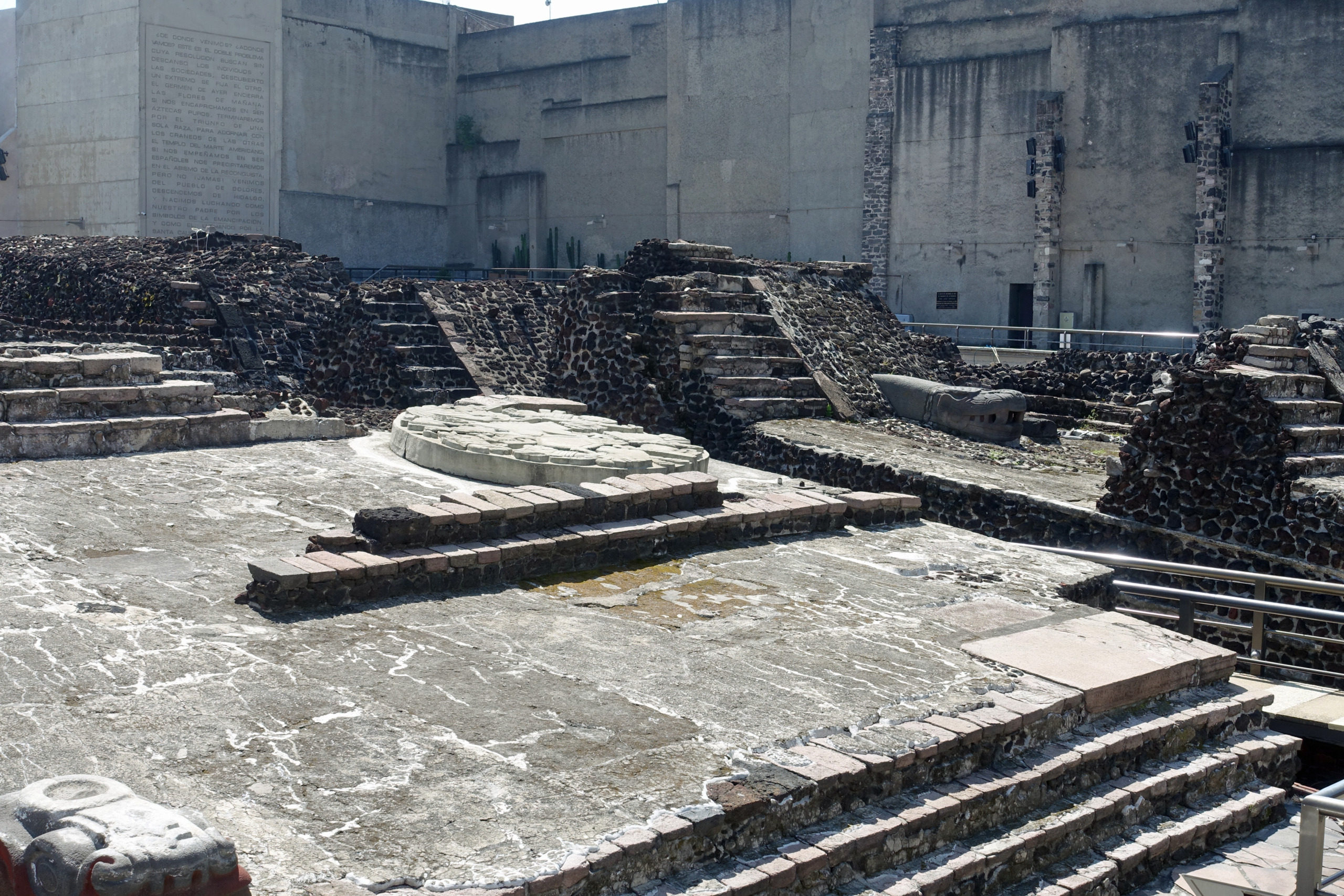
Located just off the northeast corner of the plaza is Templo Mayor, the main temple of the Aztec capital city of Tenochitlan. Built around 1325 it was destroyed by the Spanish conquistadors in 1521 and its stones used to build the nearby Metropolitan Cathedral.
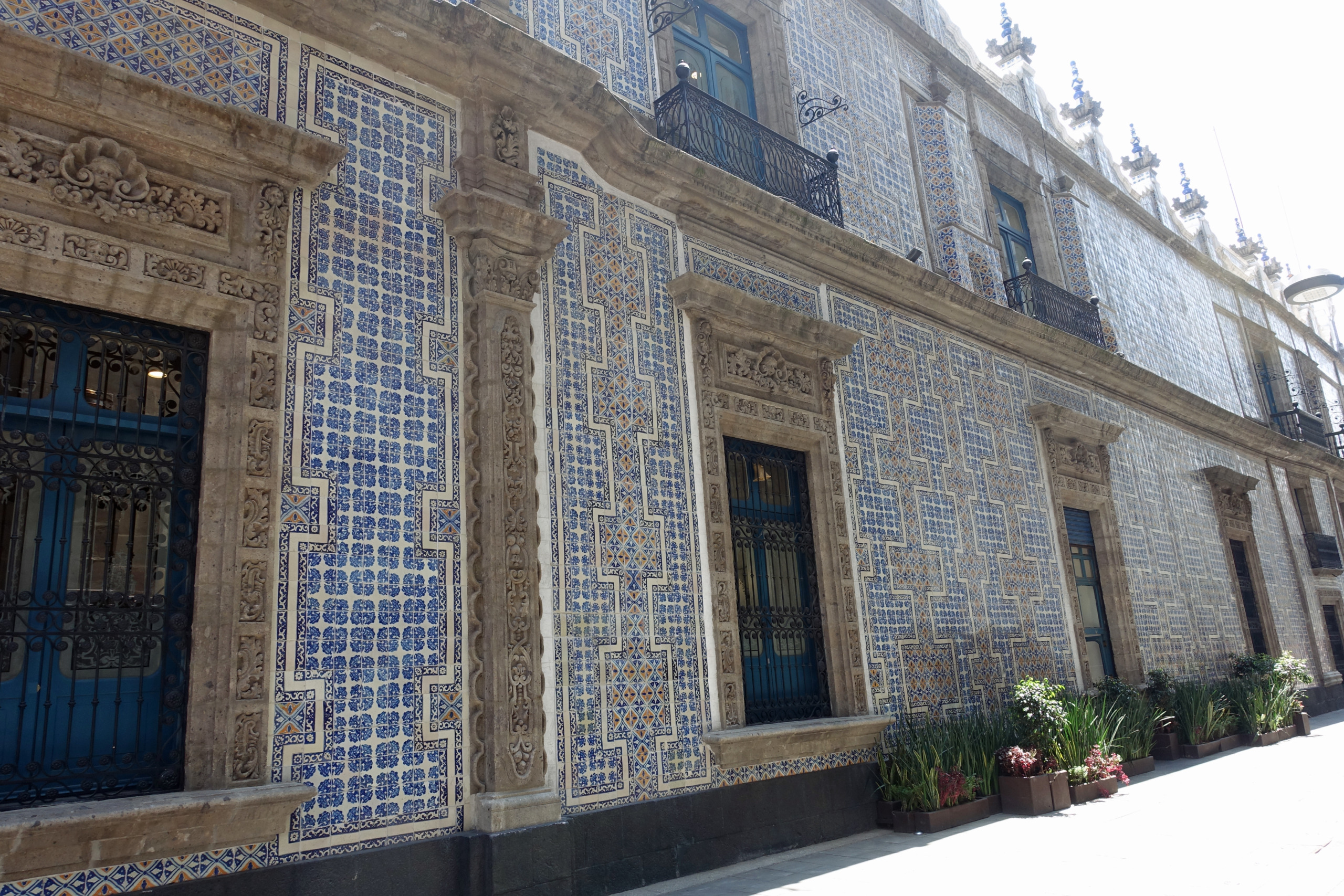
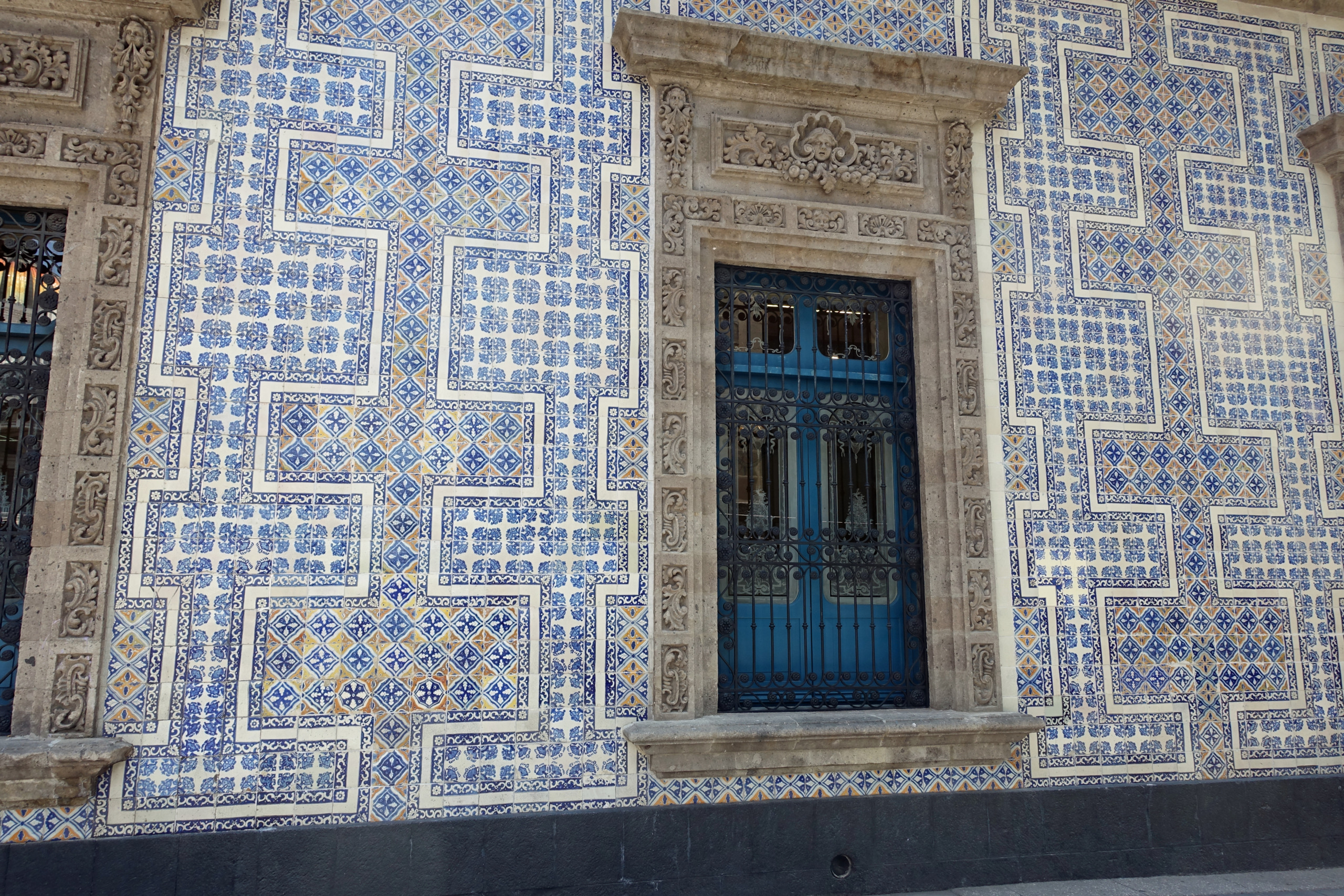
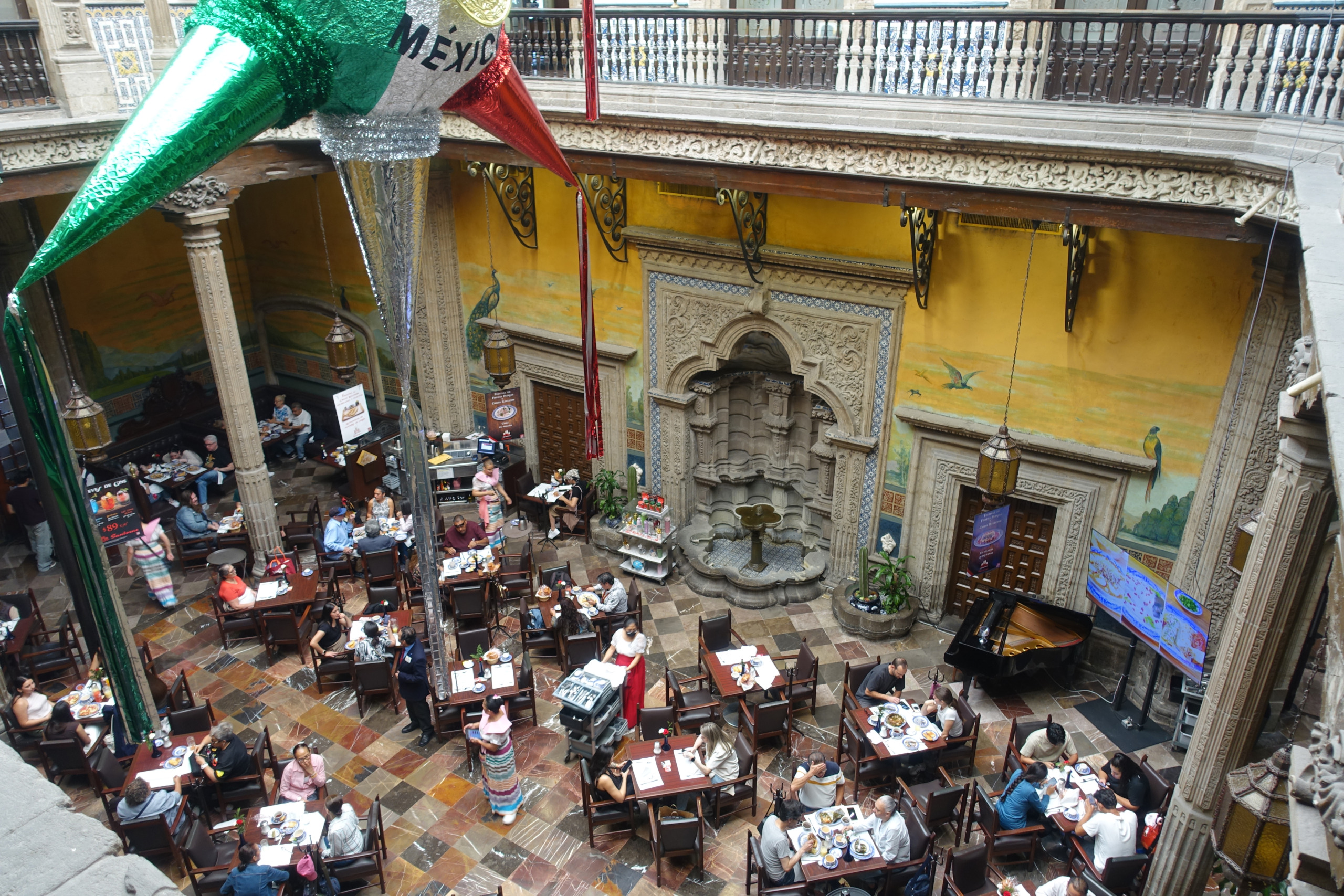
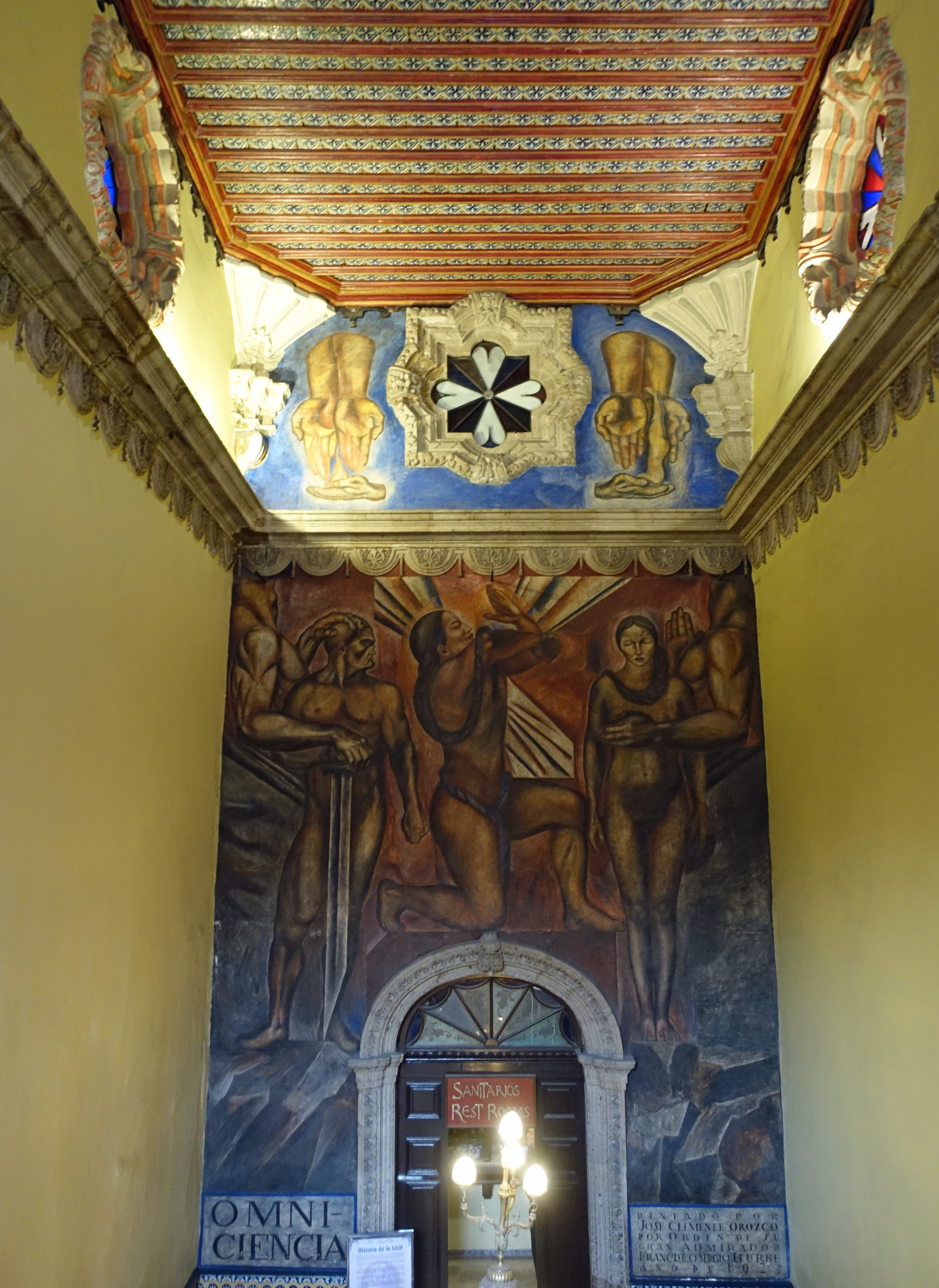
Located on the pedestrianized Avenida Madero is the Casa de los Azulejos (House of Tiles), one of the city’s most recognizable colonial Baroque structures. The exterior walls are covered on three sides with vibrant blue, white and yellow hand-painted Talavera ceramic tiles from the state of Puebla. The central courtyard features stone columns, a fountain and a glass skylight ceiling. On the landing of the grand staircase (above the entrance to the toilets) there is a famous 1925 mural created by prominent Mexican muralist Jose Clemente Orozco. In 1919 the palace was converted into a flagship location for Sanborns department store and features a restaurant in the central courtyard.
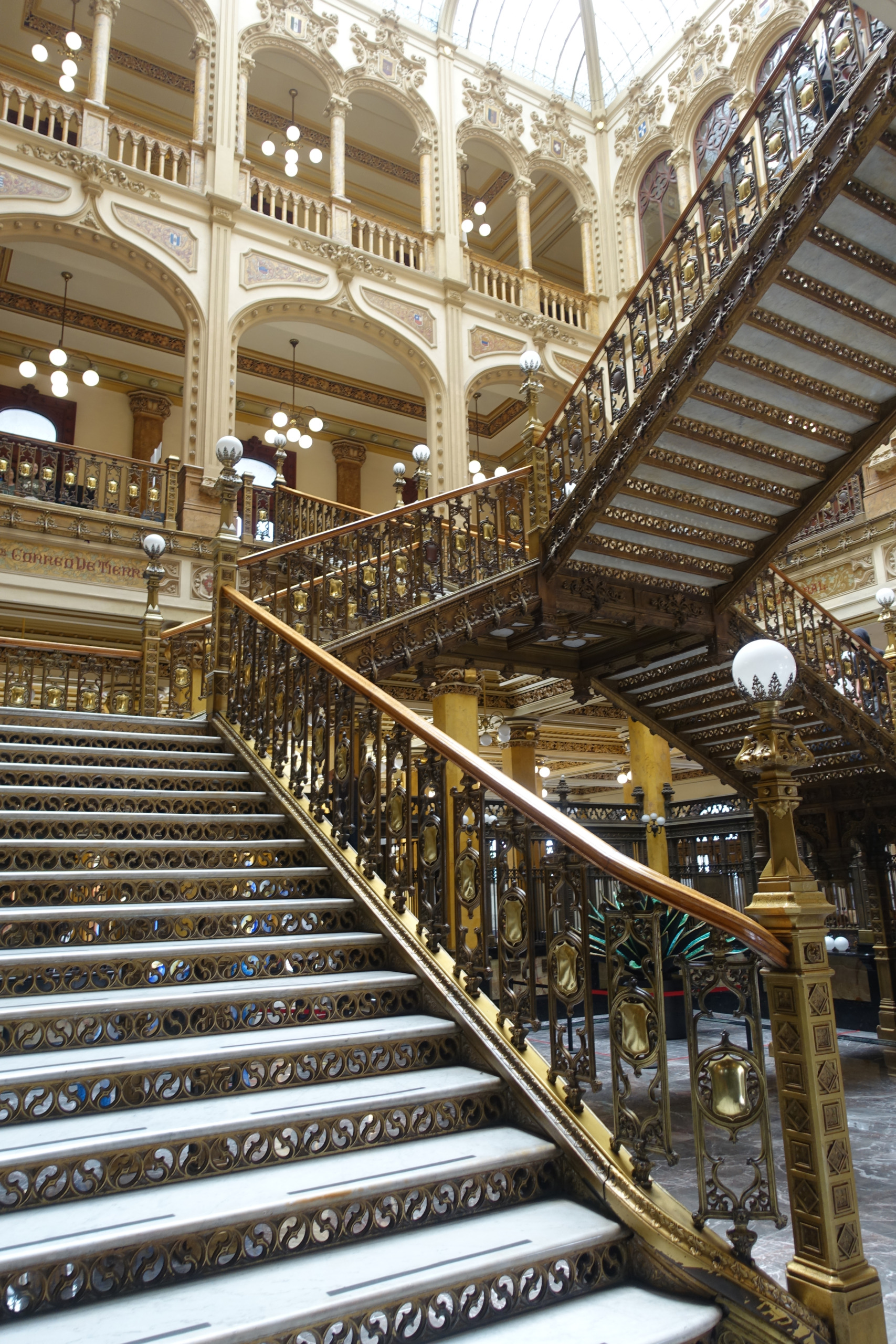
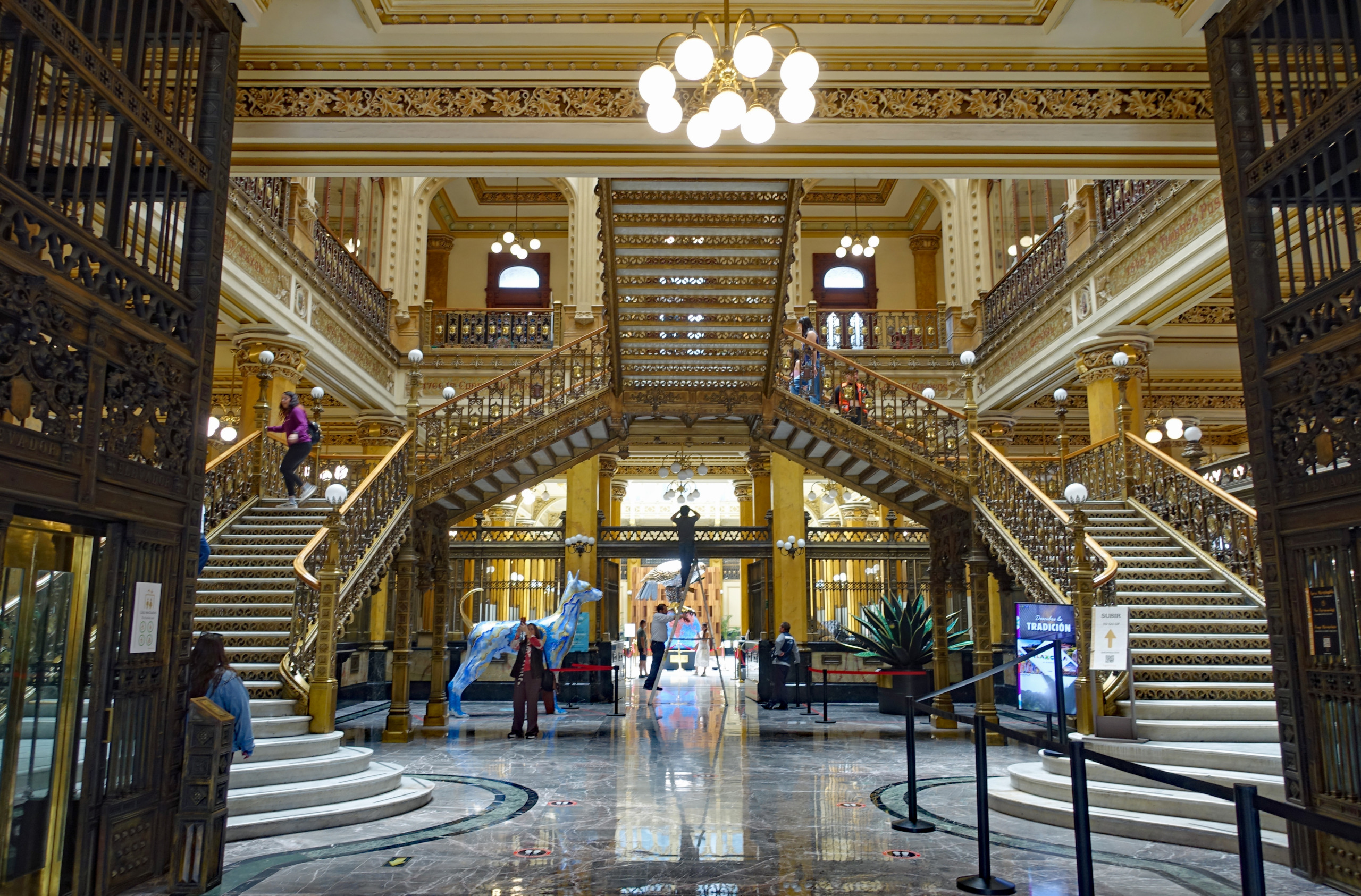
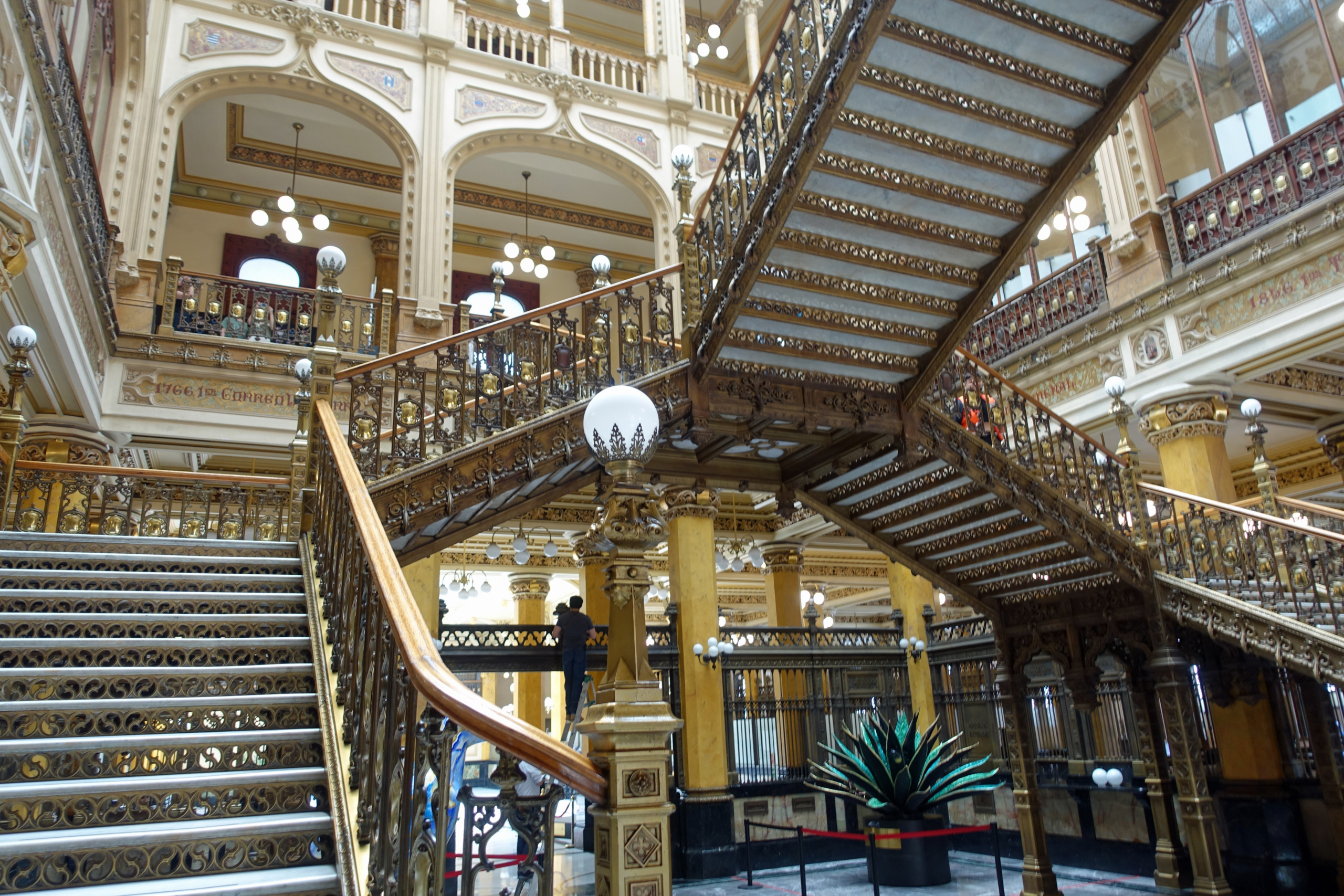
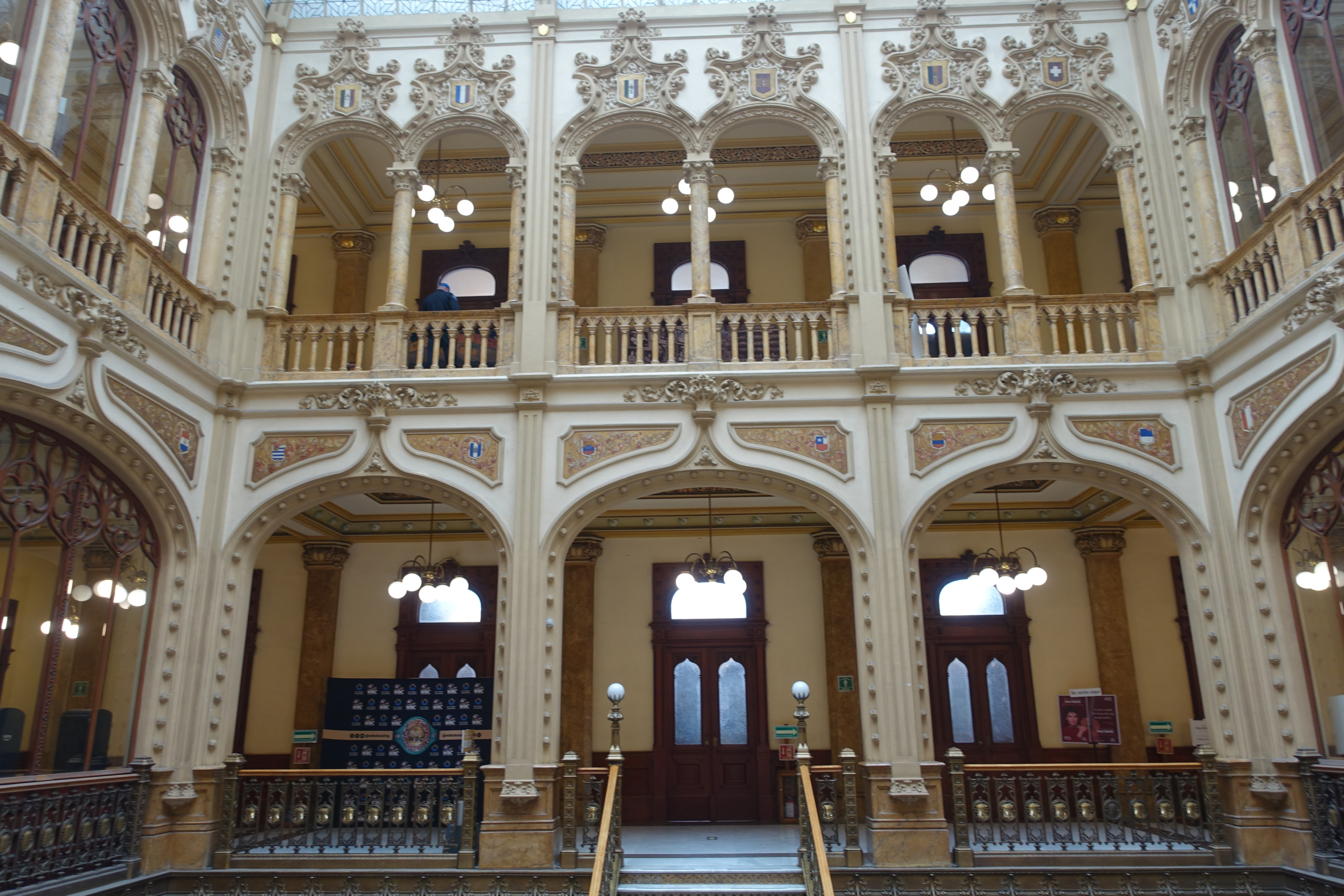
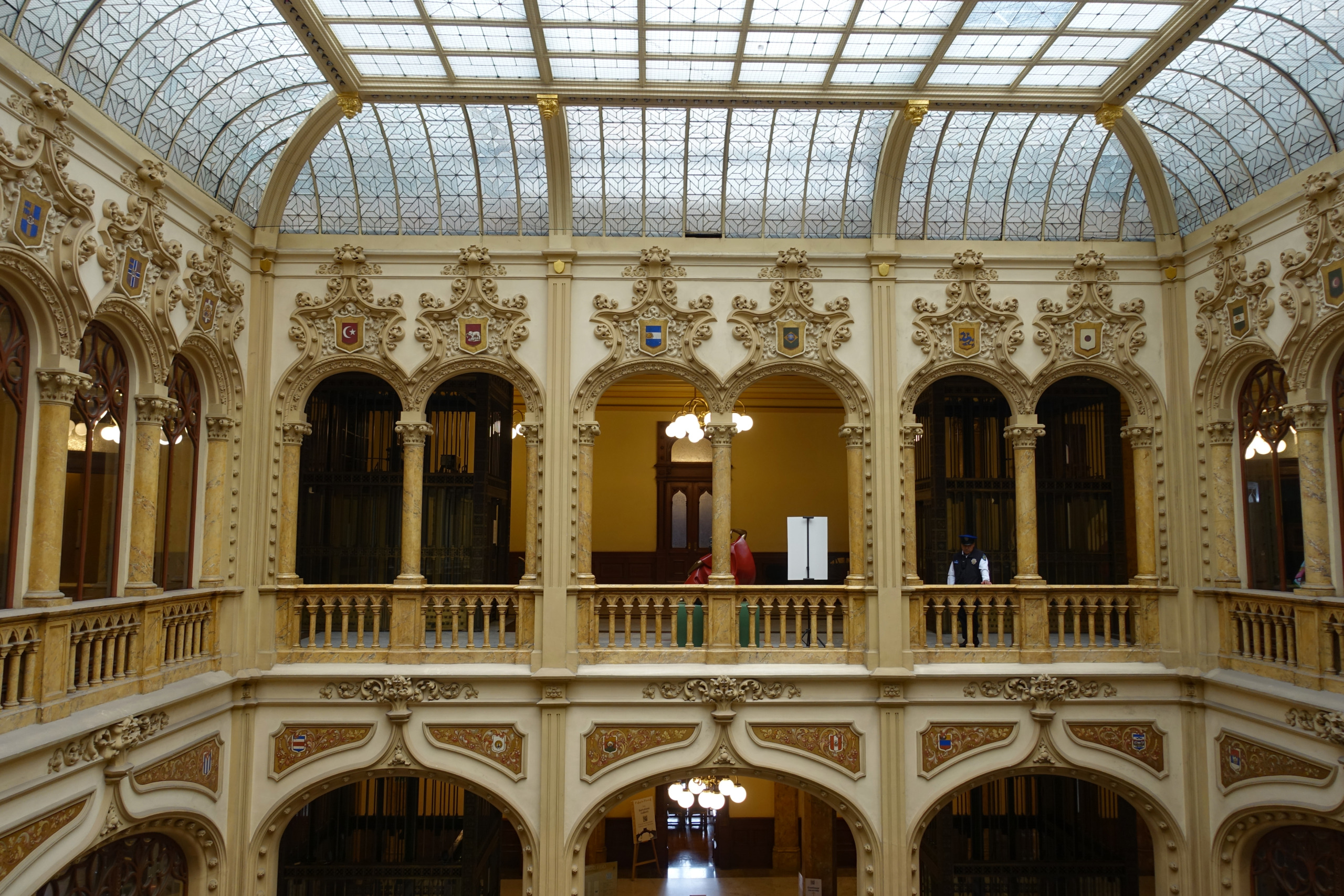
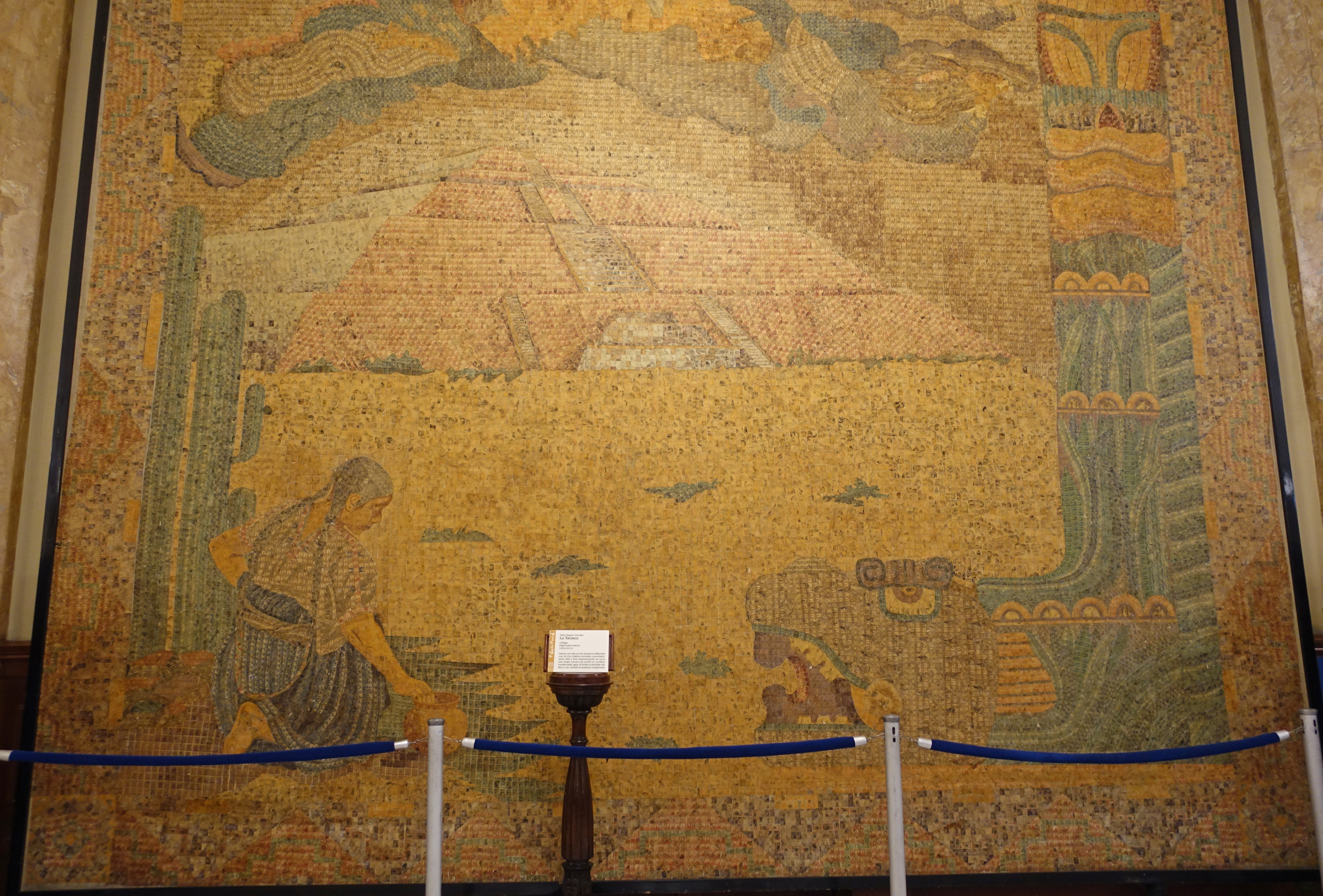
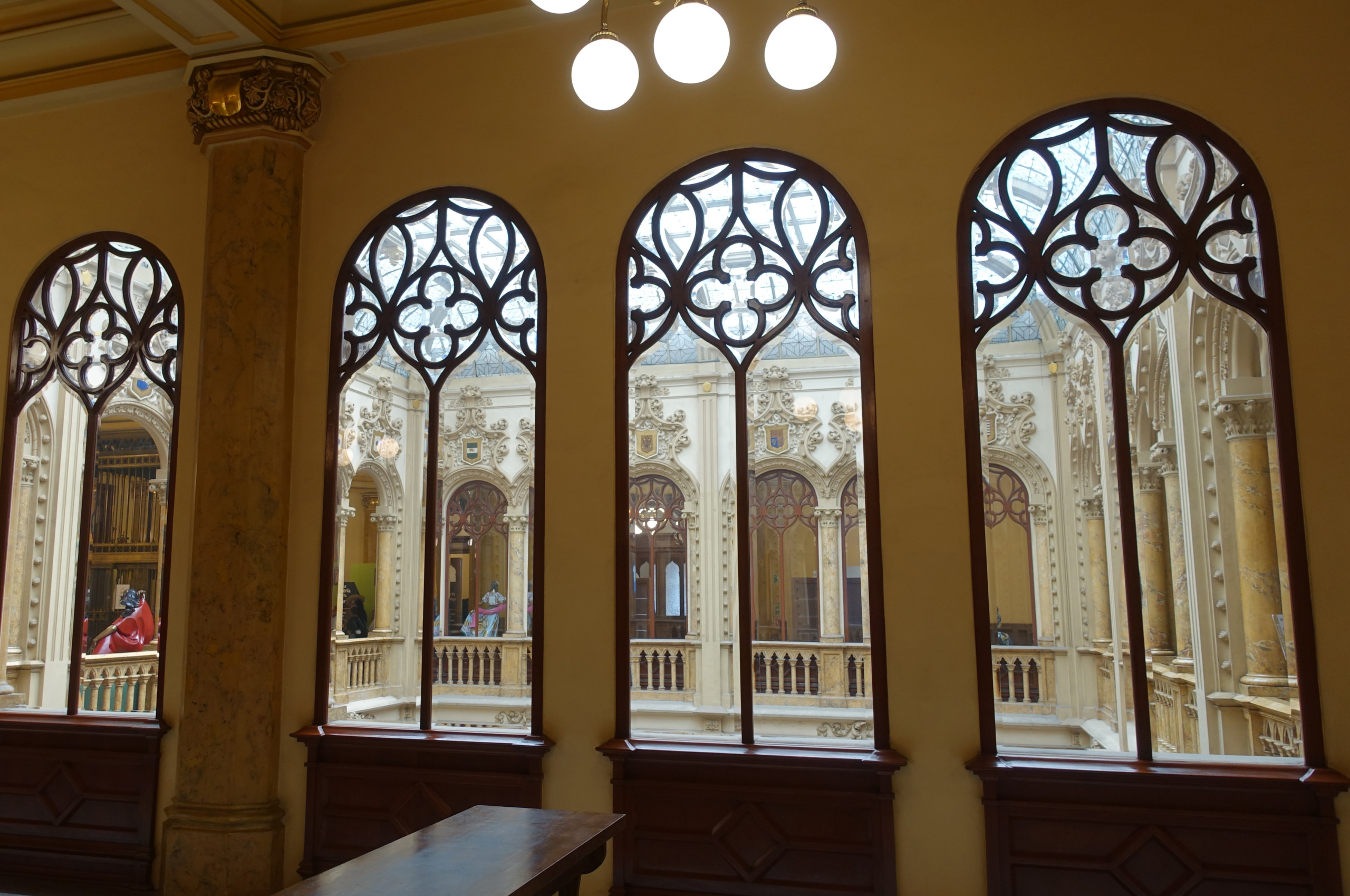
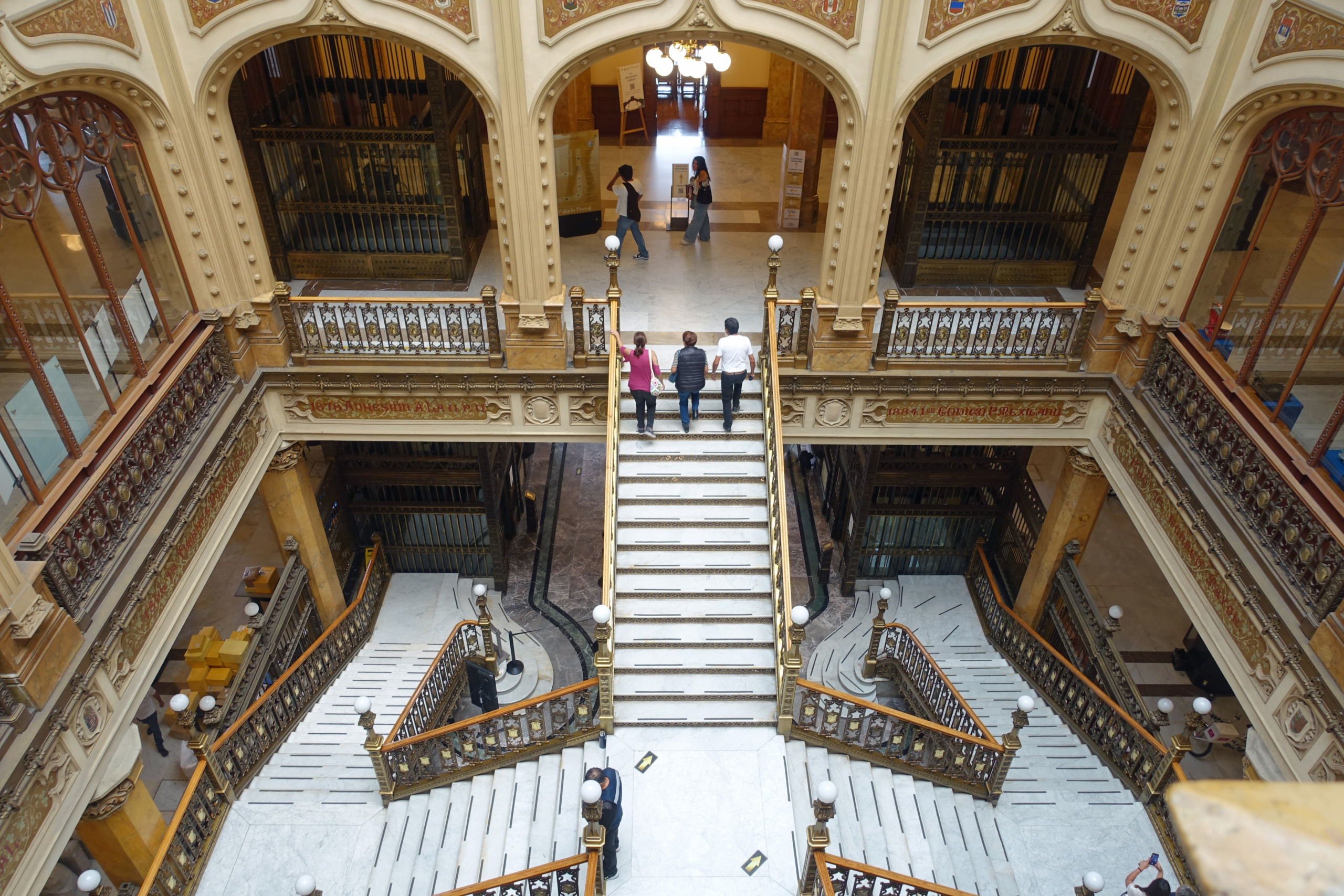
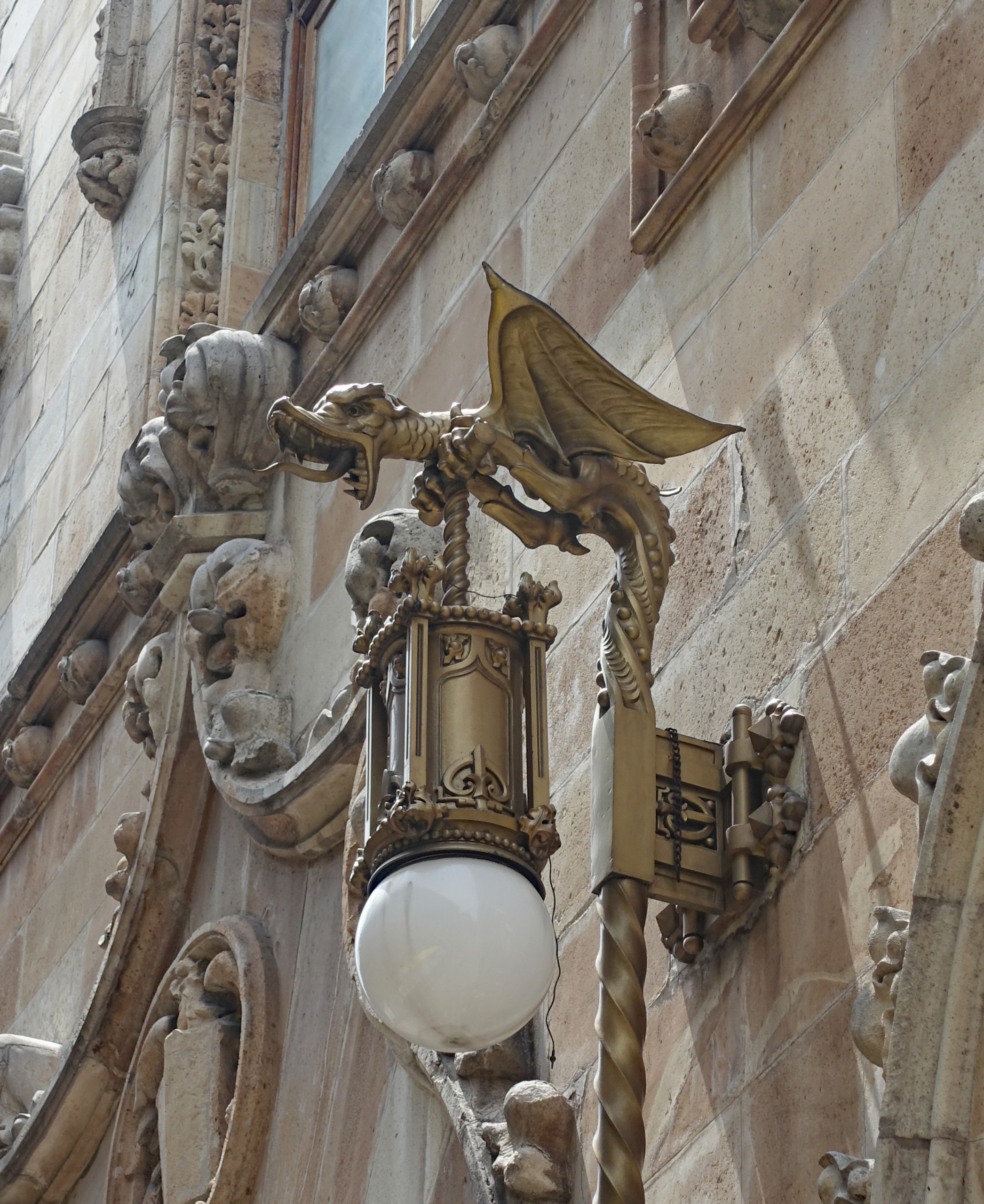
The Palacio de Correos de Mexico (the post office building) is a stunning architectural masterpiece designed by Italian architect Adamo Boari. Construction began in 1902 and the building was inaugurated in February 1907. The building blends several styles including Spanish Renaissance Revival, Plateresque, Venetian Gothic, and Art Nouveau. I particularly liked the dragon gargoyles on the exterior walls. Inside, the central atrium features a sweeping grand staircase crafted from cast iron imported from Florence, Italy and intricate marble floors from Italy. Despite its palace-like appearance, it remains an active postal facility with the upper floors housing an on-site museum with a massive mural made entirely of stamps. Tickets to the museum cost MXN 50 pesos each.
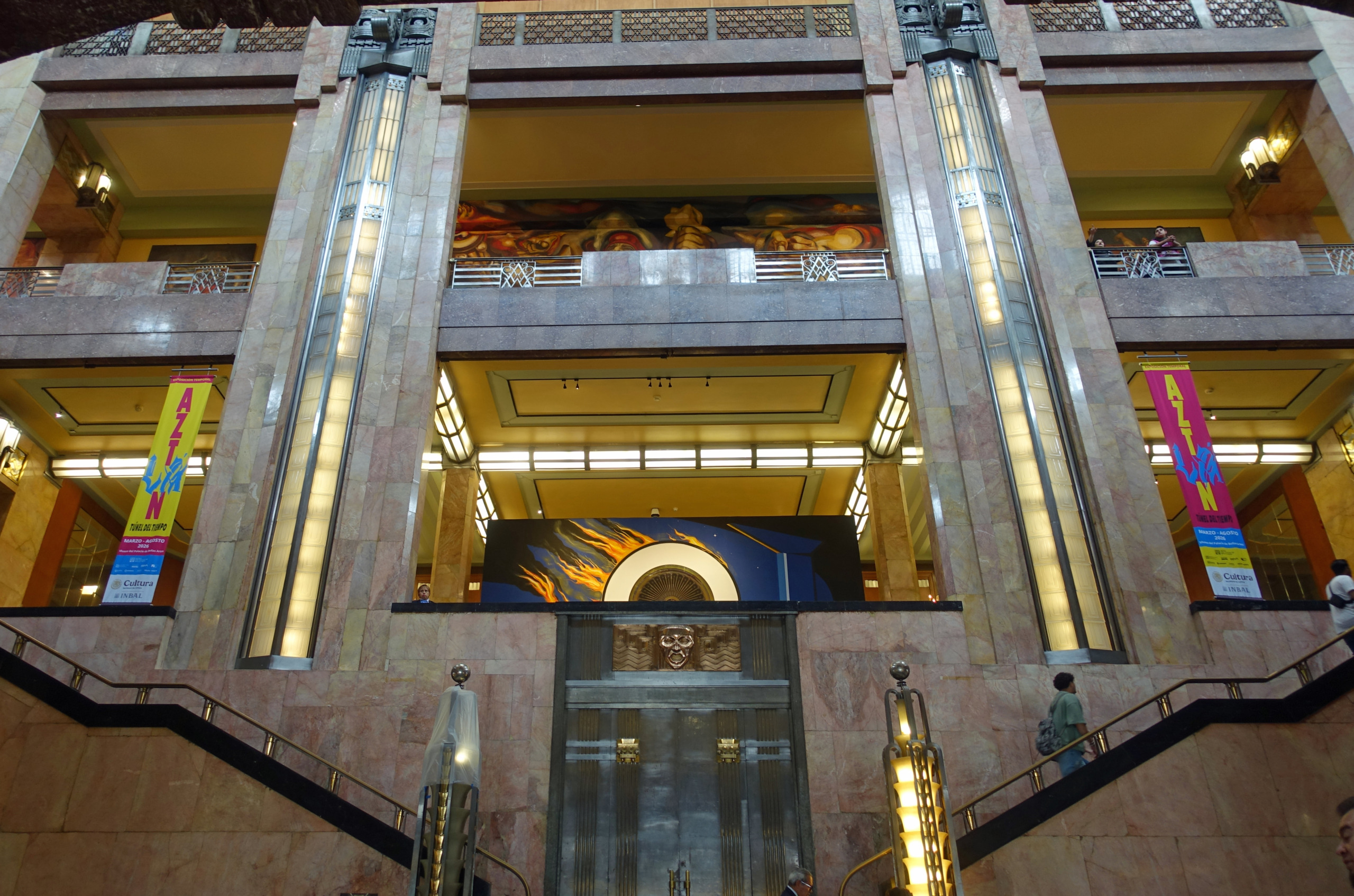
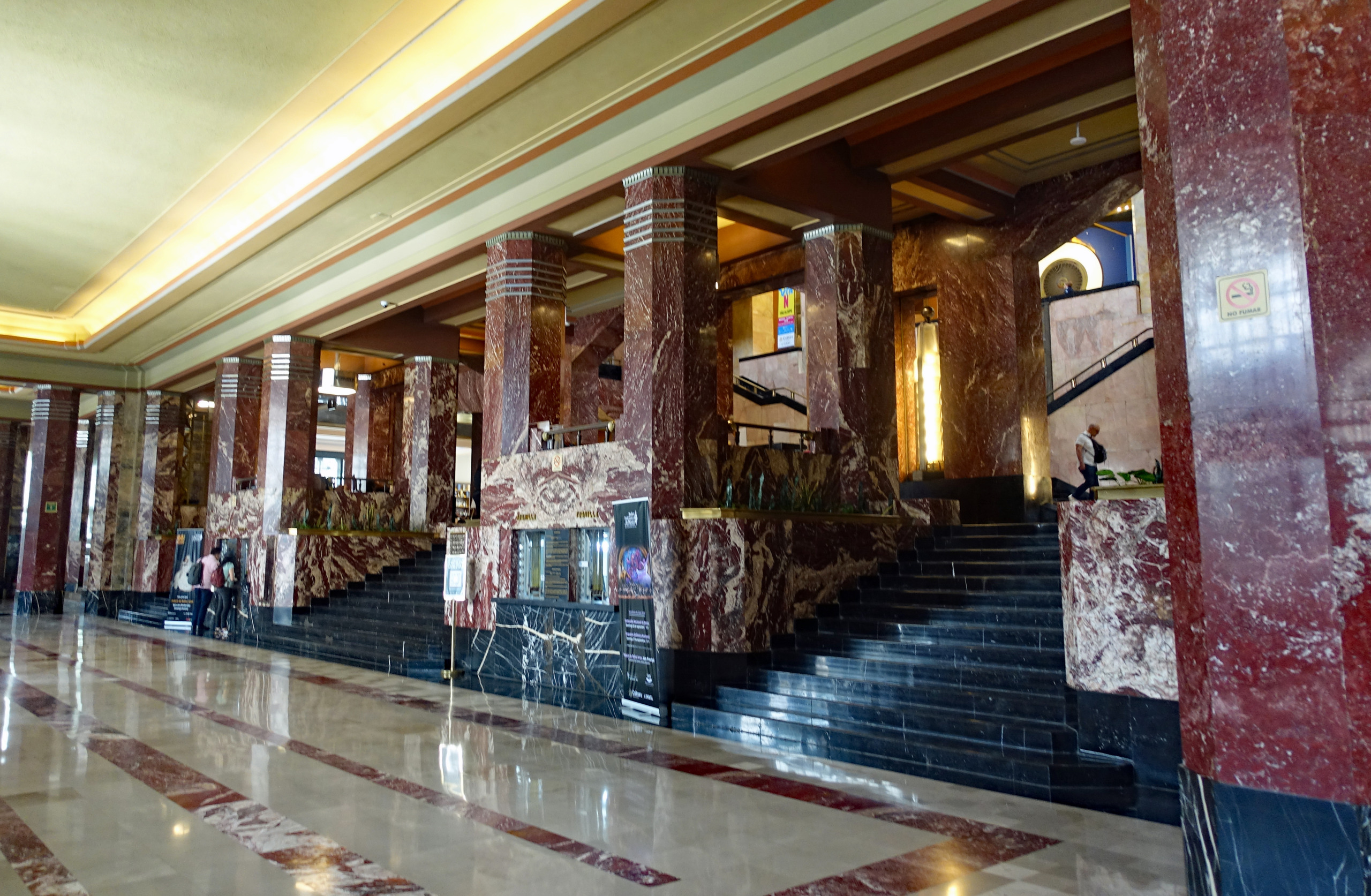
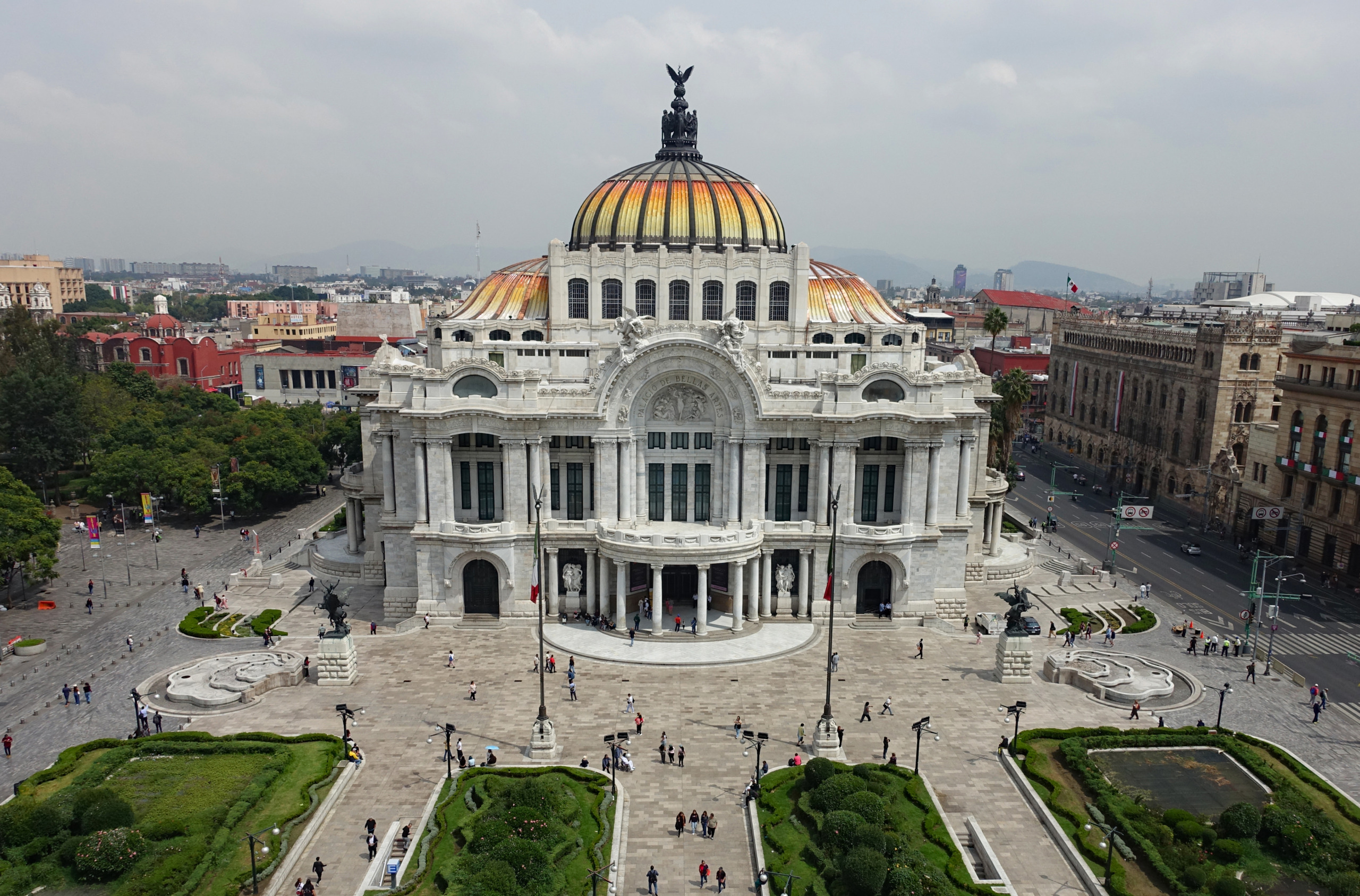
Our walking tour finished at the Palacio de Bellas Artes (Palace of Fine Arts), Mexico City’s premier cultural center, grand concert hall and museum of fine arts. The Palacio was designed by Italian architect Adamo Boari (the same guy that designed the Palacio Postal), construction began in 1904 but was not completed until 1934 being interrupted by the Mexican Revolution in 1910 and then stalled for decades. The Art Nouveau exterior is built from brilliant white Italian Carrara marble and a signature orange, yellow and red tiled glass dome. In contrast the interior showcases a dramatic Art Deco style with polished geometric marble work. The lobby area is free to look around but a ticket is required to visit the upper floor galleries.
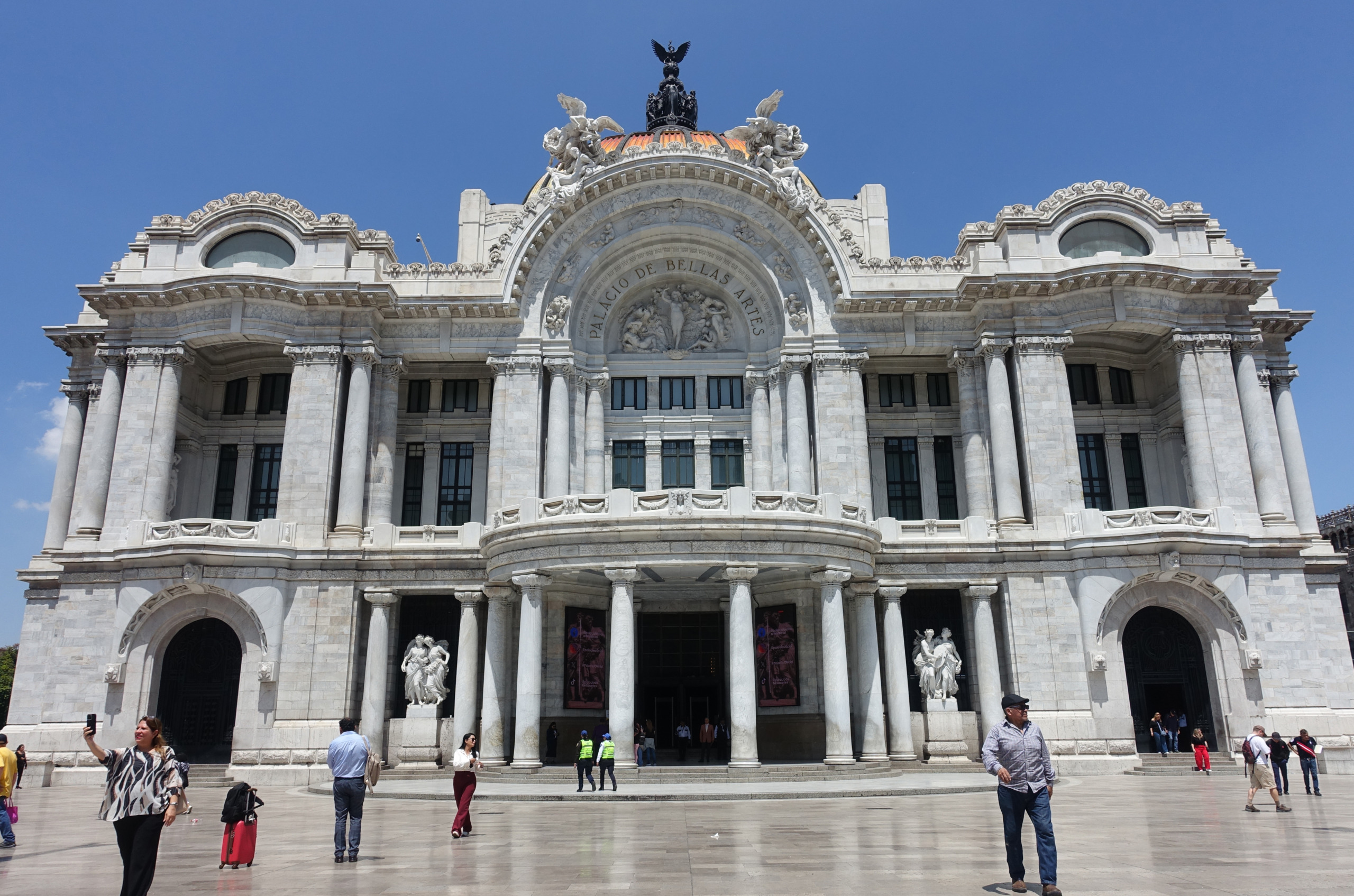
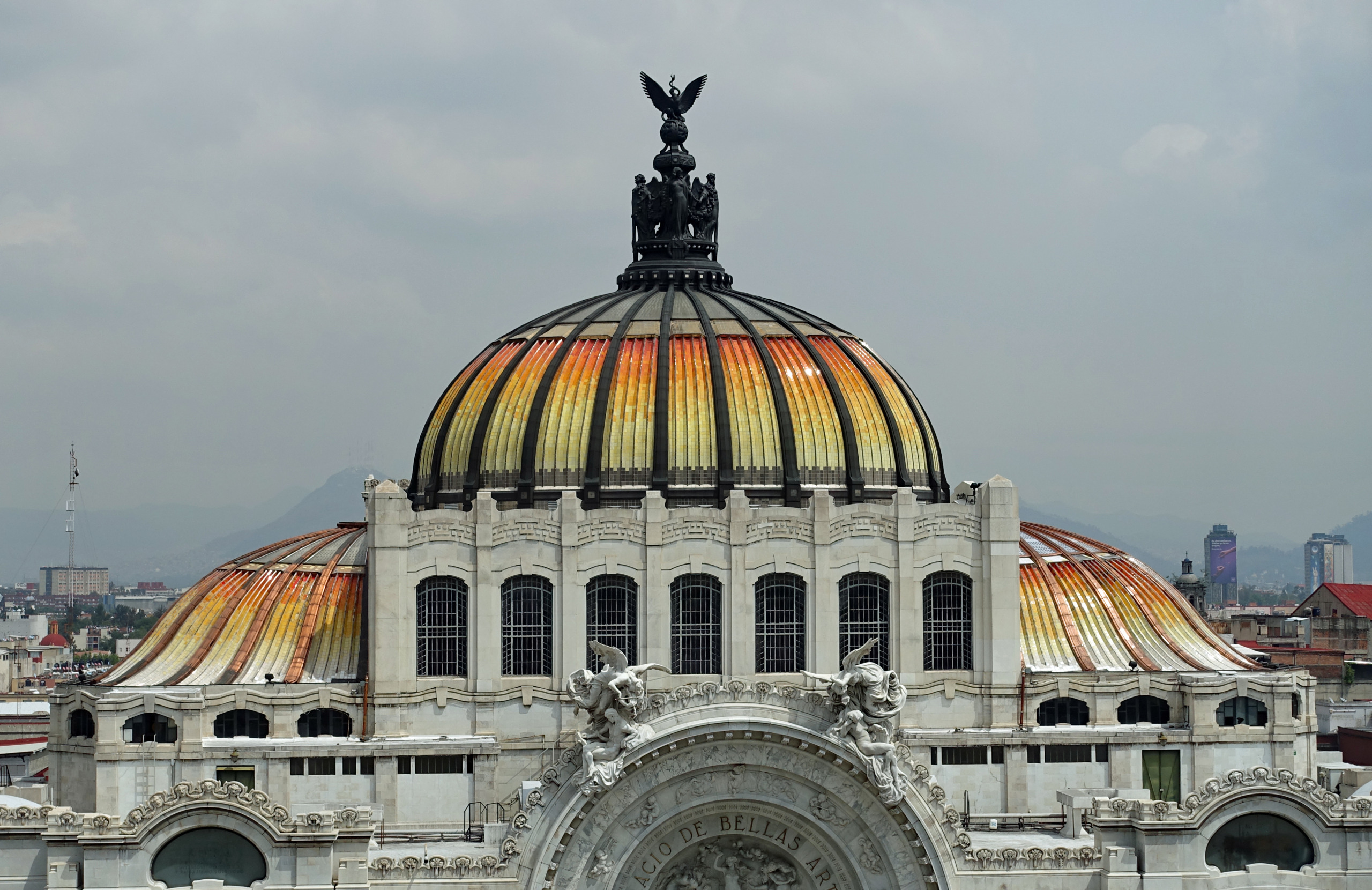
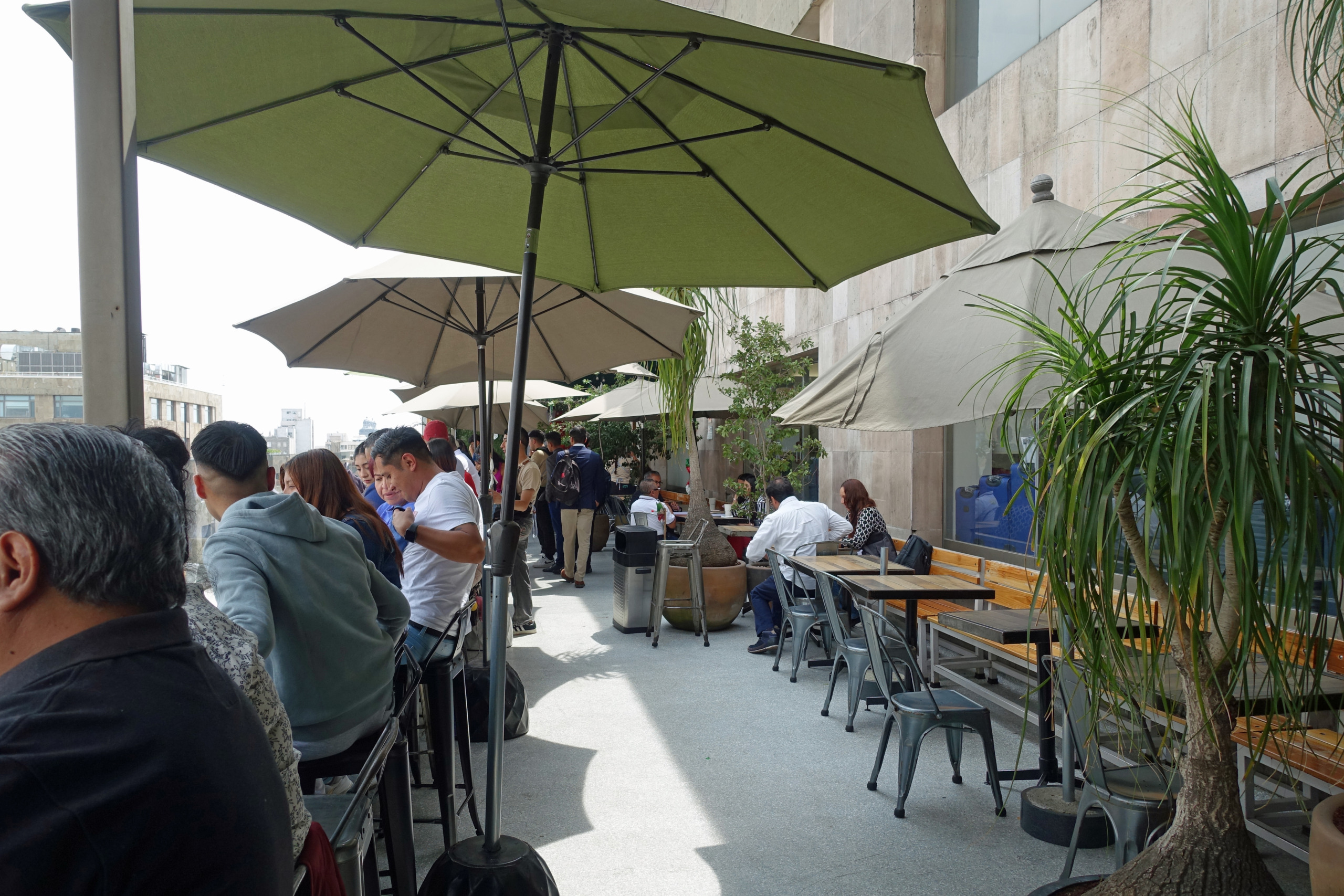
Because our walking tour ended outside the Palacio de Bellas Artes building we returned the next morning for panoramic views from Finca Don Porfirio on the 8th floor of the Sears building across the street. The cafe is one of the most famous coffee shops in the historic center offering unmatched head-on views of the Palacio de Bellas Artes. Because its extremely popular we arrived at their 11am opening time and had no problem getting a seat at the balcony for our allotted 30 minutes to enjoy a coffee. The views were well worth the price of our cappuccino’s.
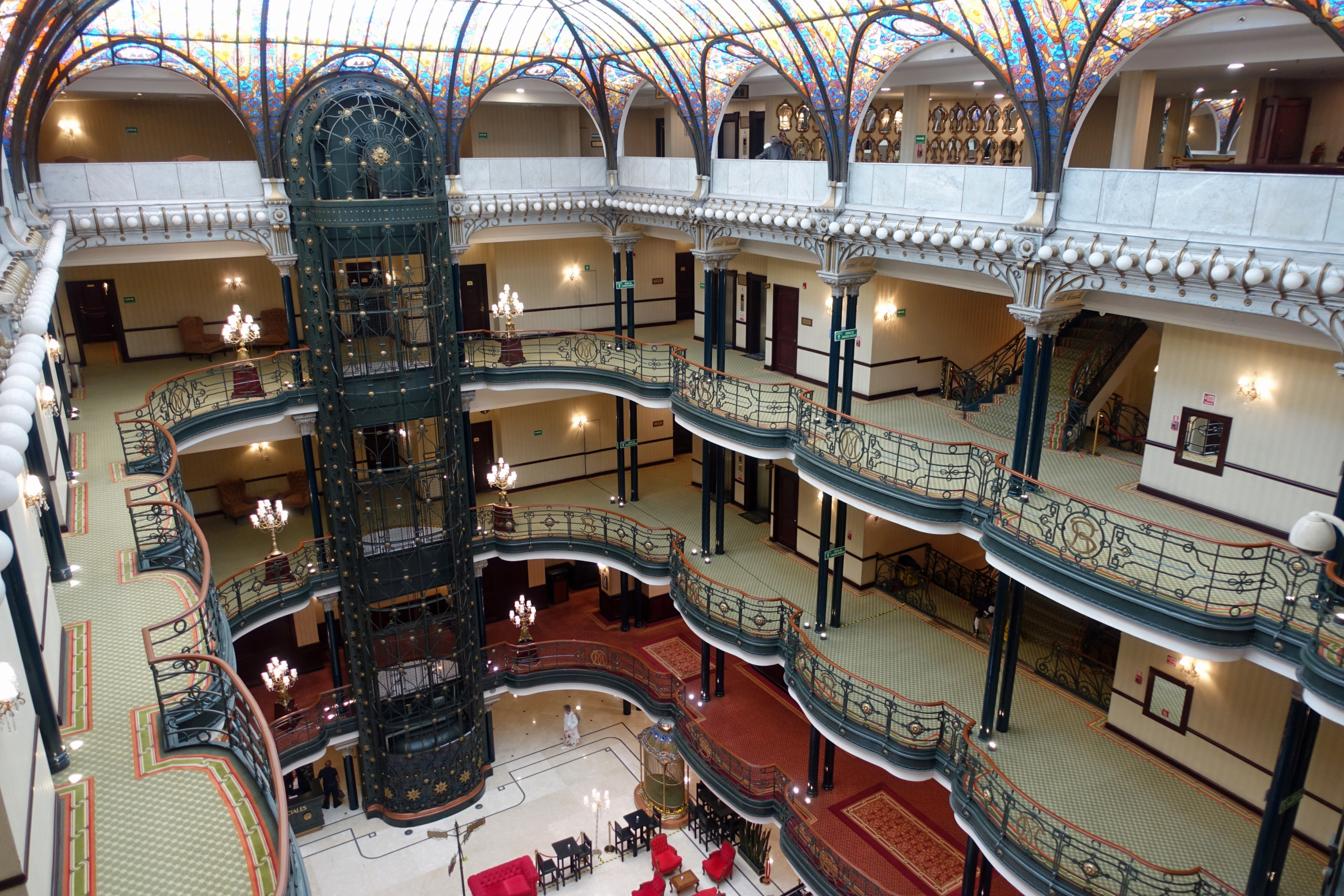
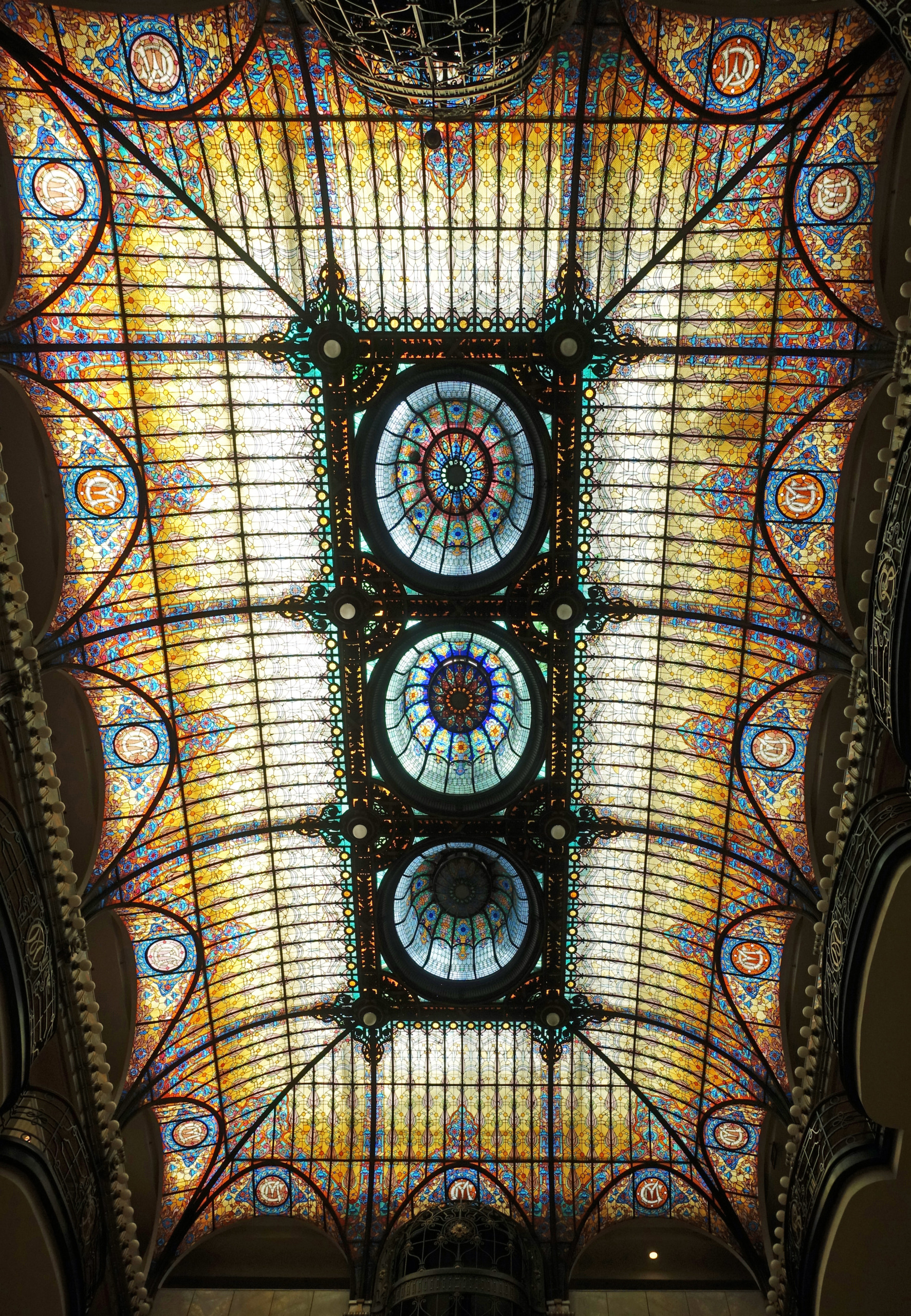
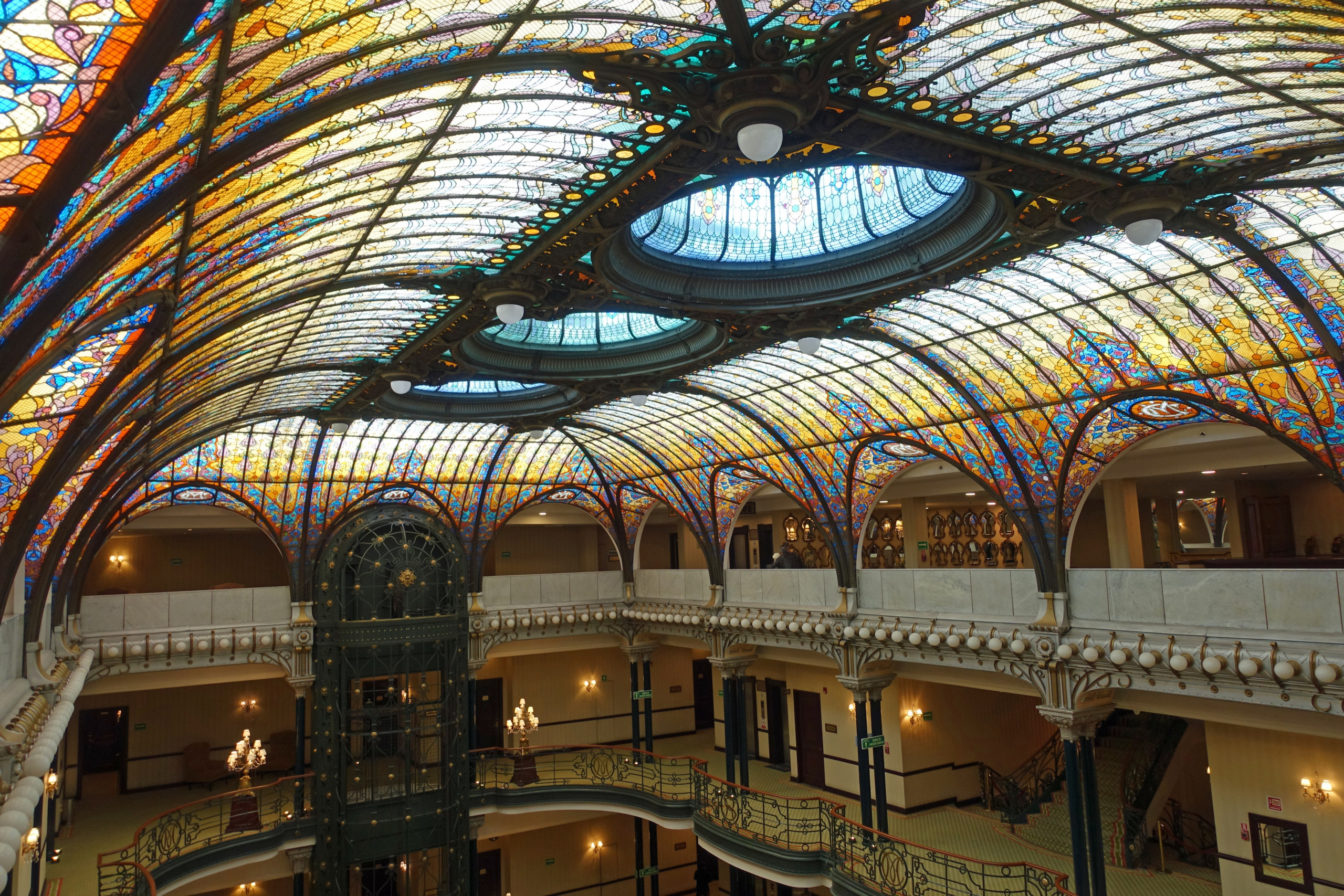
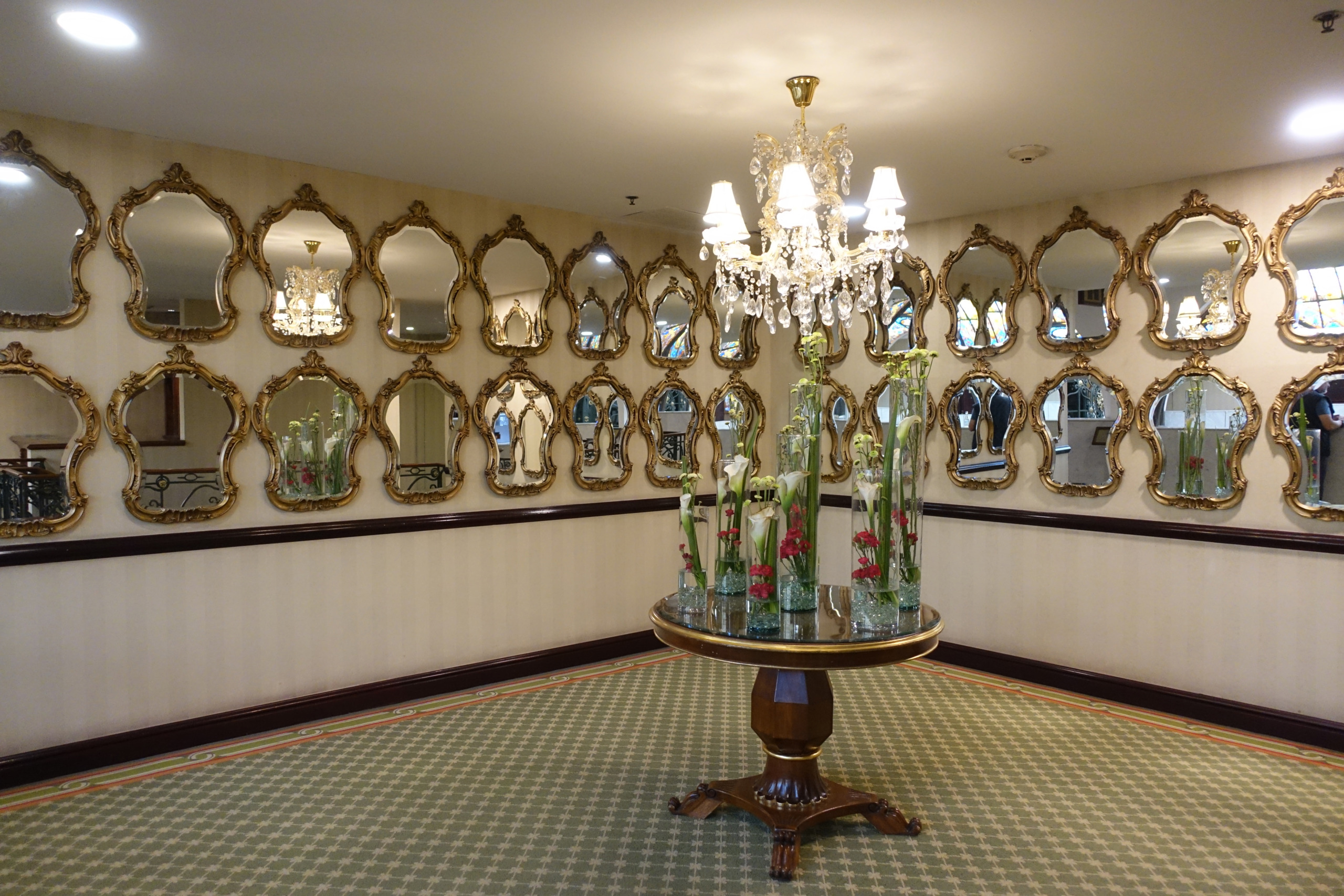
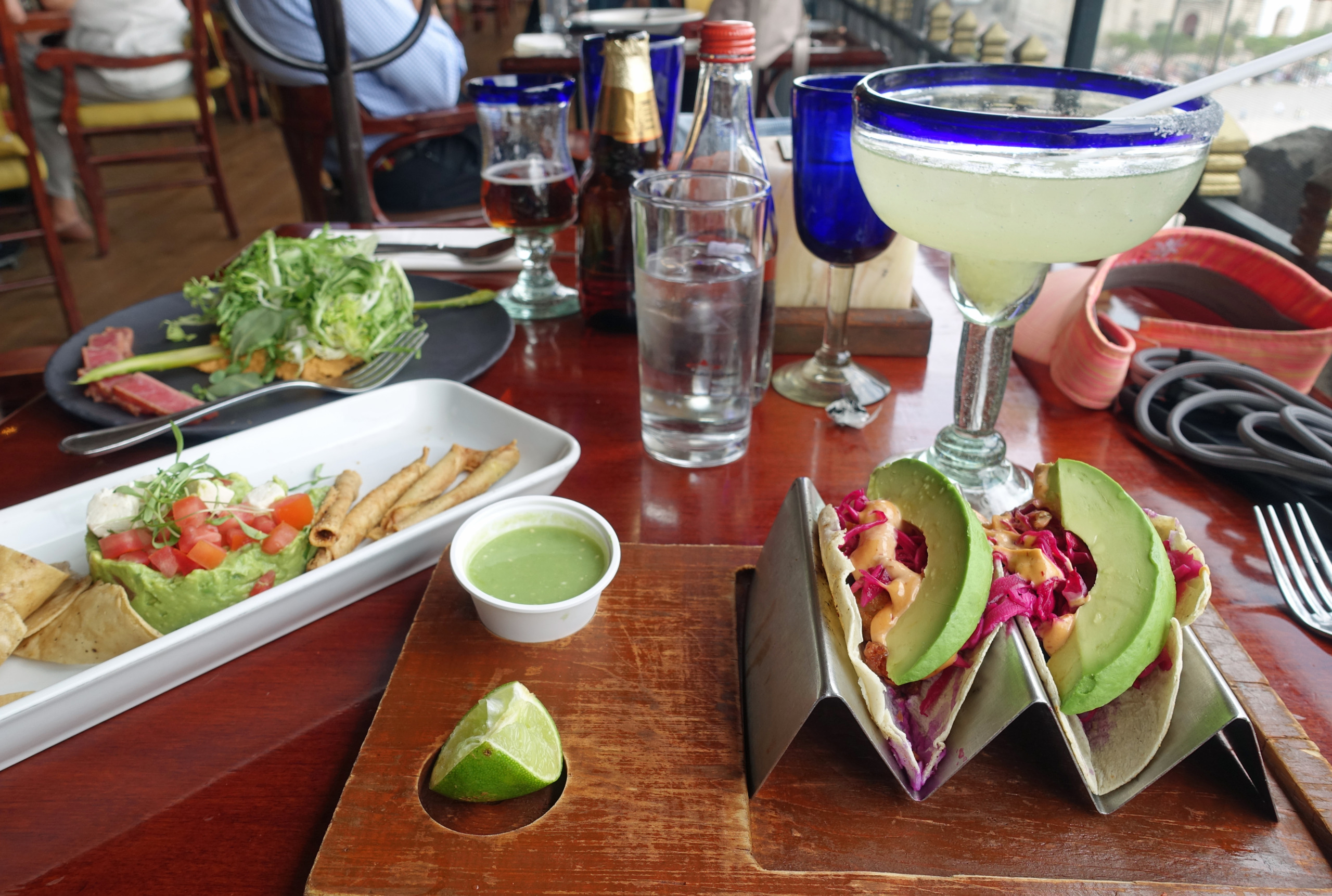
Walking around Zócalo square one day, we were looking for a place to have lunch and stumbled upon the Gran Hotel Ciudad de Mexico, one of the most famous historic luxury hotels in the city. The hotel is situated at the SW corner of the Zócalo plaza and is renowned for its opulent Art Nouveau interior architecture and dramatic views of the main plaza. The centerpiece of the hotel is its grand interior atrium, topped by an immense Tiffany stained-glass canopy created in 1908 by French artisan Jacques Grüber. Featuring over 20,000 pieces of glass in rich blues, golds, and reds, it is illuminated from above and is one of the largest Tiffany glass ceilings in the world. The lobby features a sweeping wrought-iron dual staircase imported from France, gold-leaf accents, antique birdcages, and two original vintage brass-and-iron birdcage elevators that are still fully operational. The building was originally commissioned as a department store, designed to mirror the grand shopping arcades of Paris and Europe. In 1968, in preparation for the Mexico City Olympic Games, the former department store was converted into a luxury hotel while carefully preserving its historic interior decor and grand atrium. The rooftop restaurant, La Terrazza, offers fine dining alongside panoramic views of Zócalo plaza, the Metropolitan Cathedral, and the National Palace. It was a pricy lunch but the views were worth it, and the margarita was excellent.
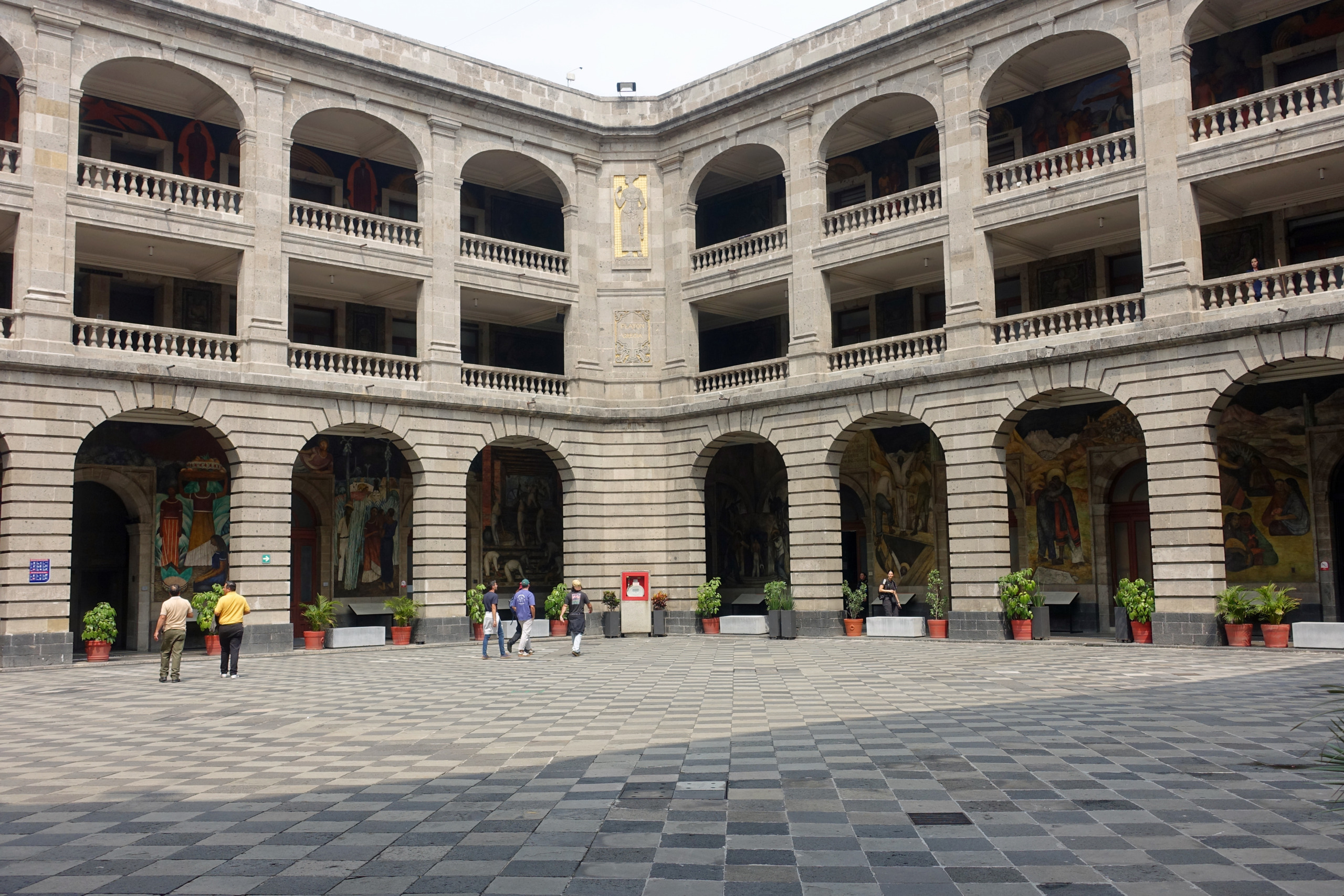
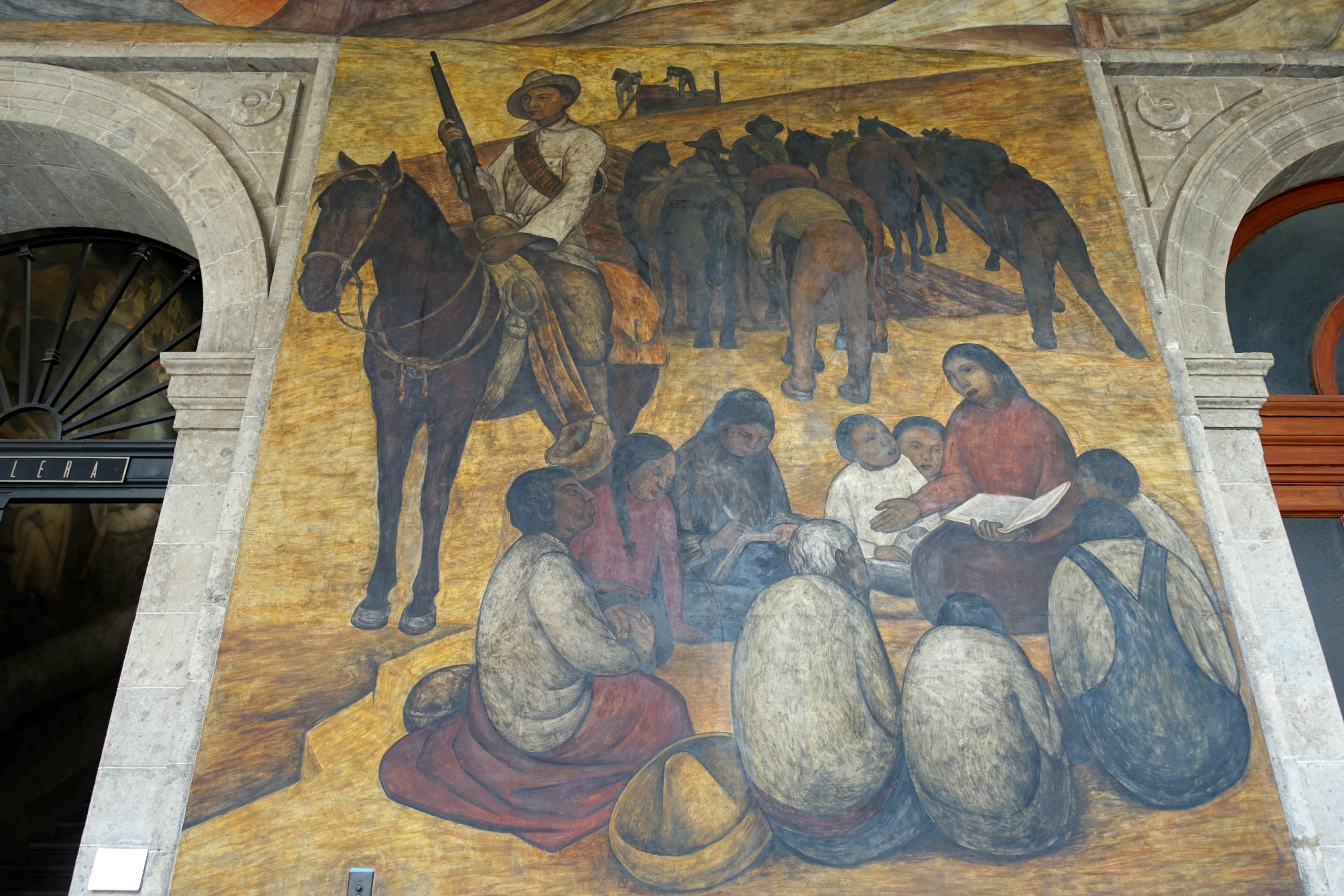
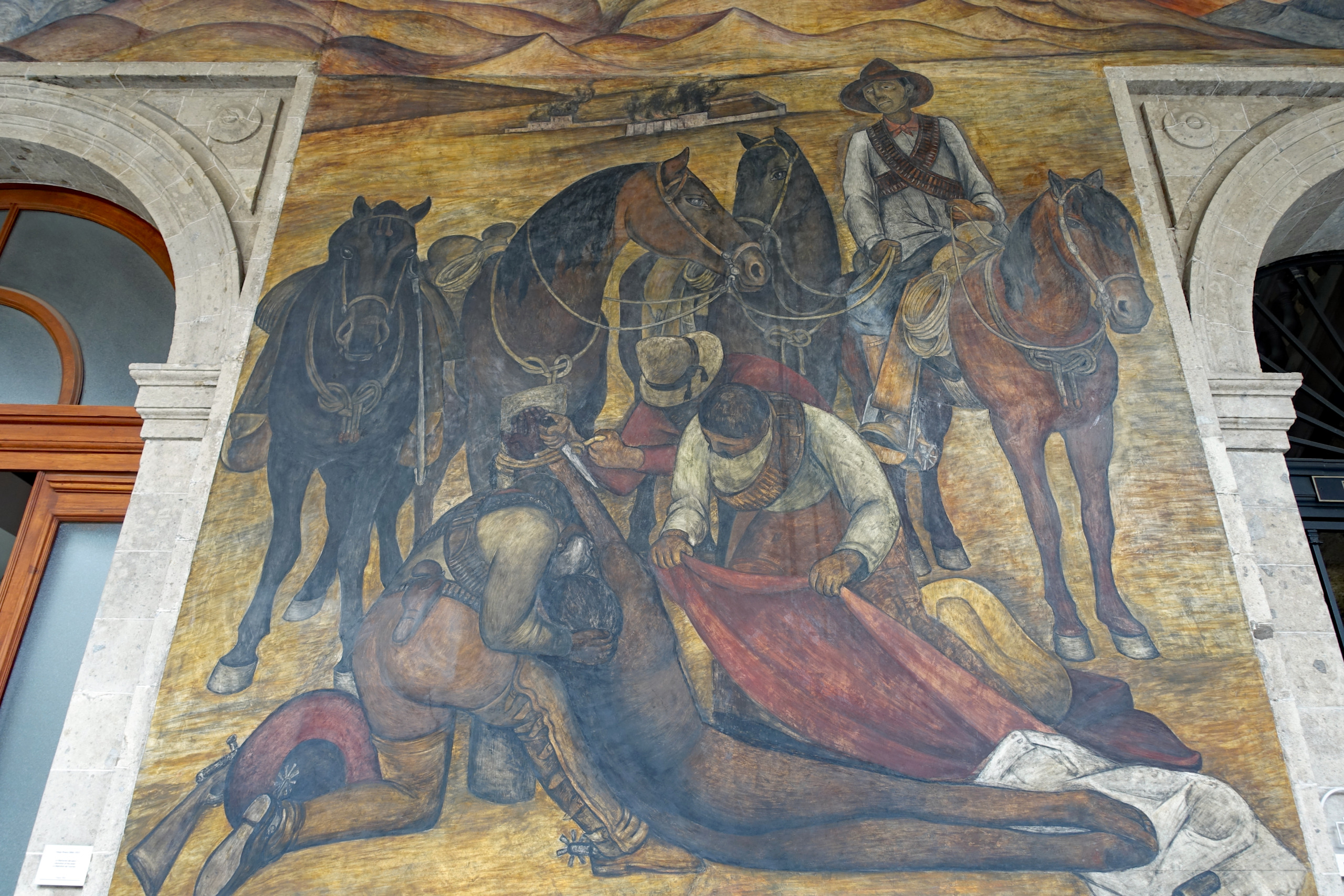
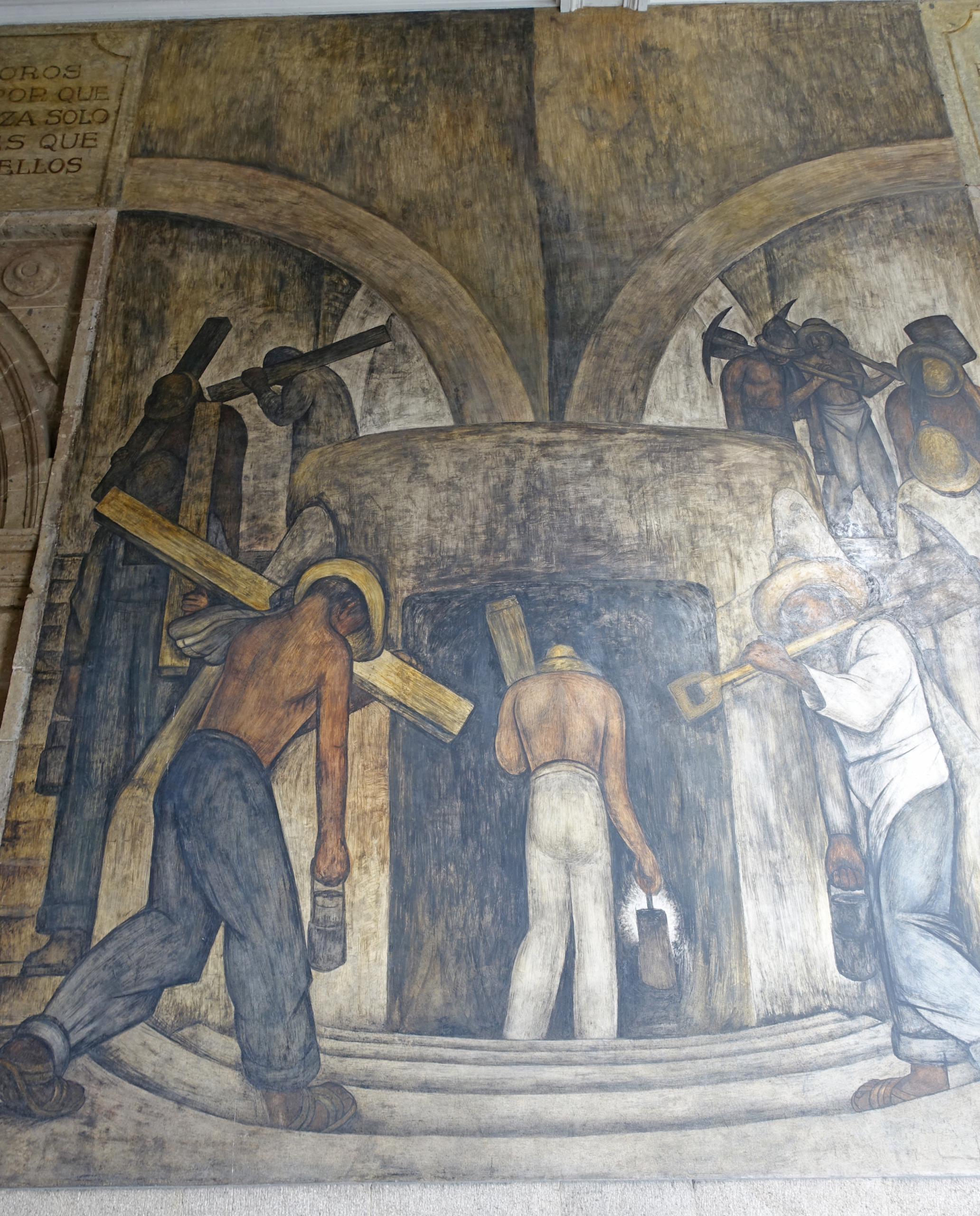
The Department of Education building on Plaza Santo Domingo is renowned as the birthplace of the Mexican Mural Renaissance. Built in 1639 the building originally functioned as a convent until 1921 when it was remodeled into the federal education headquarters. The building is home to over 100 fresco panels painted primarily by Diego Rivera between 1923 and 1928, covering nearly 17,000 square feet. On the main floor the murals depict traditional Mexican industries and indigenous traditions. We were overwhelmed by the volume of murals covering 3 levels that we only managed to see the ground floor works.
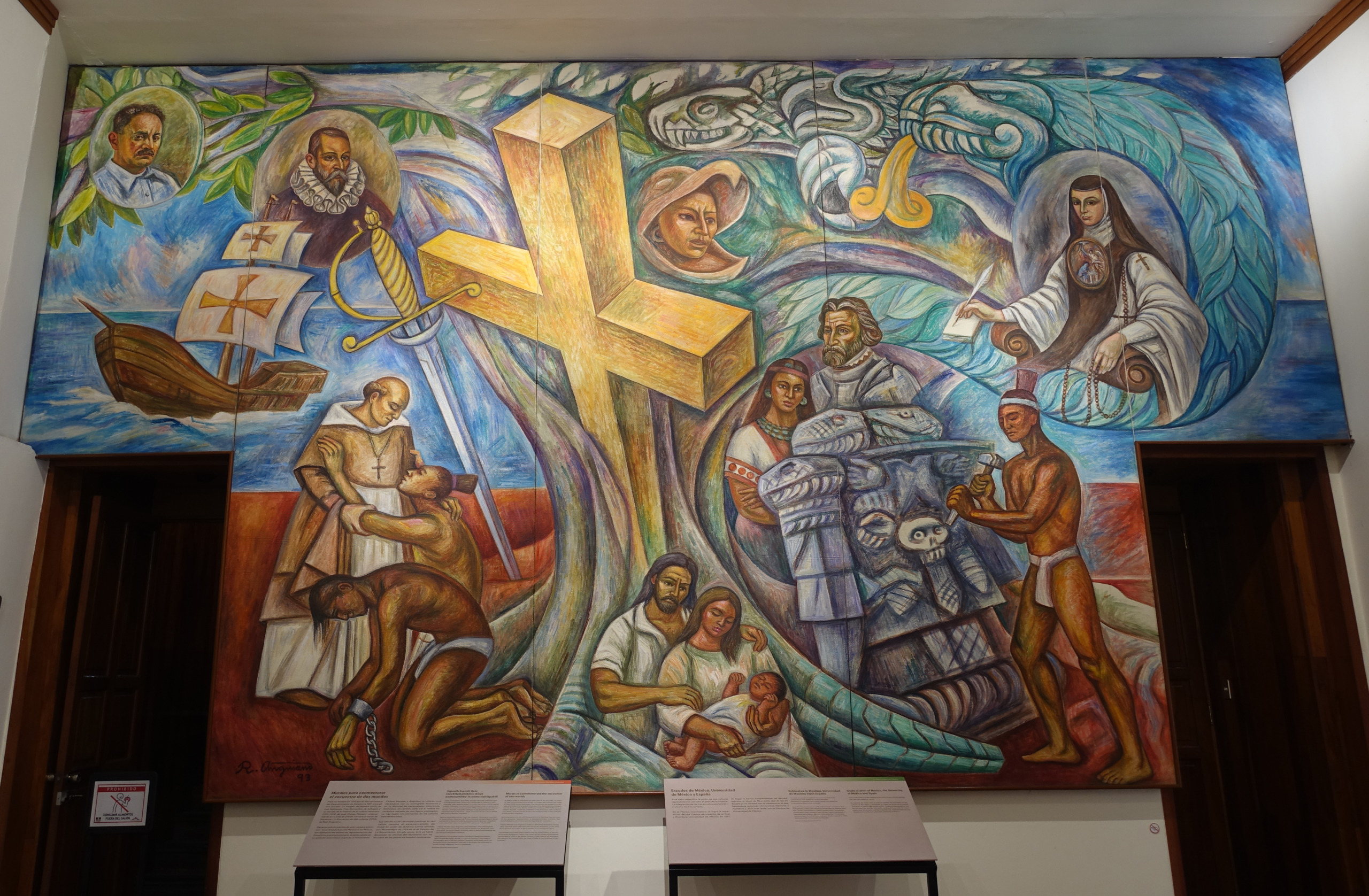
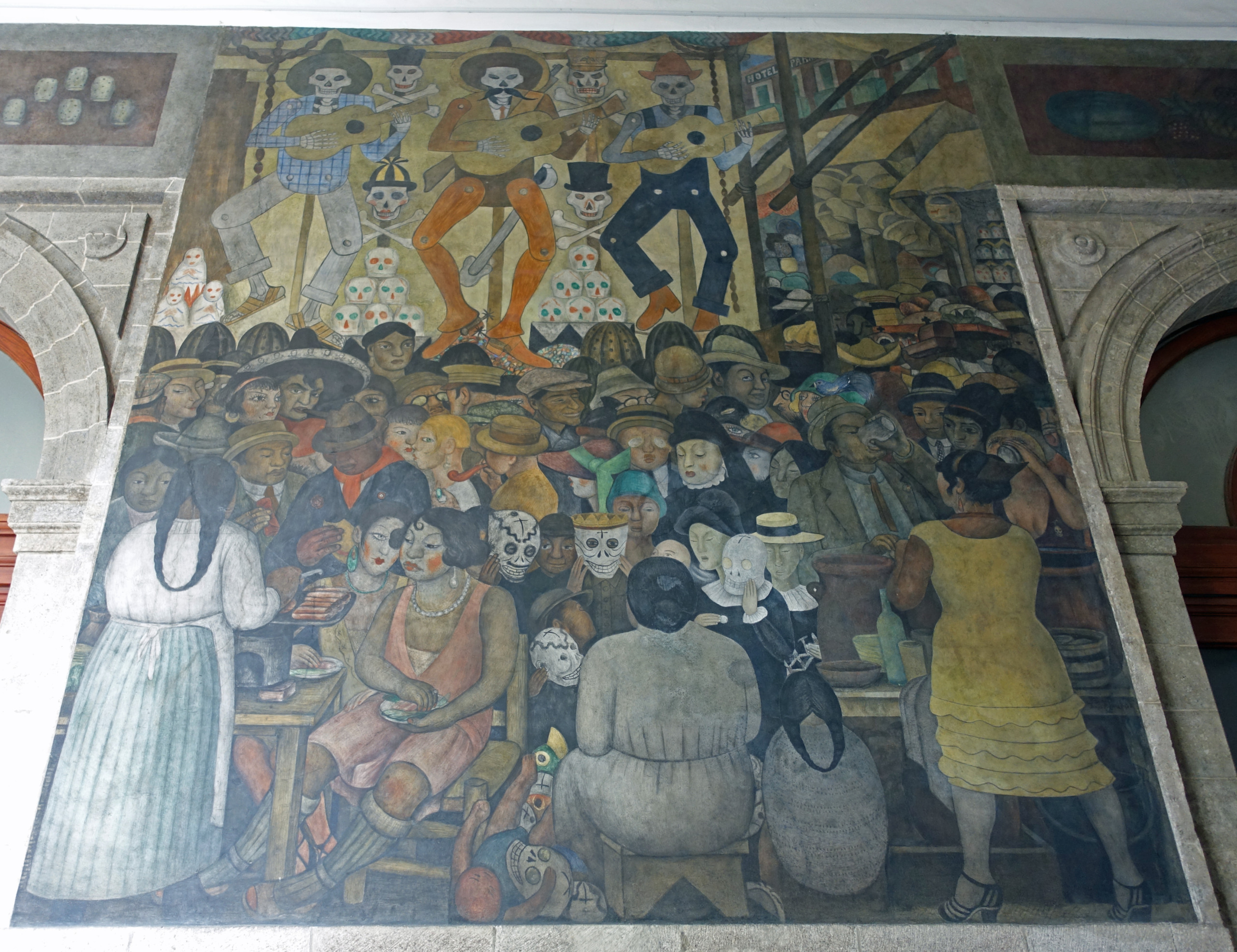
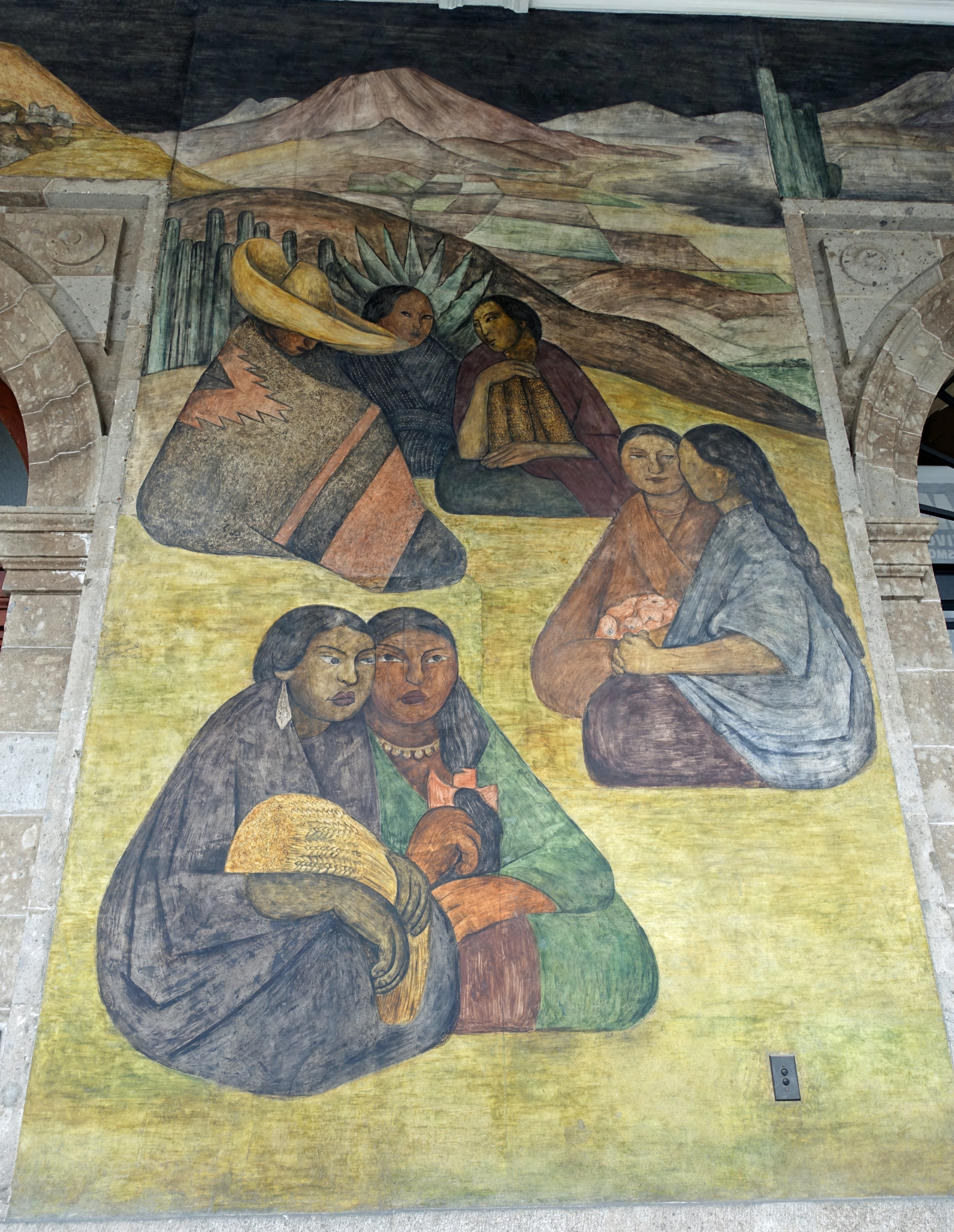
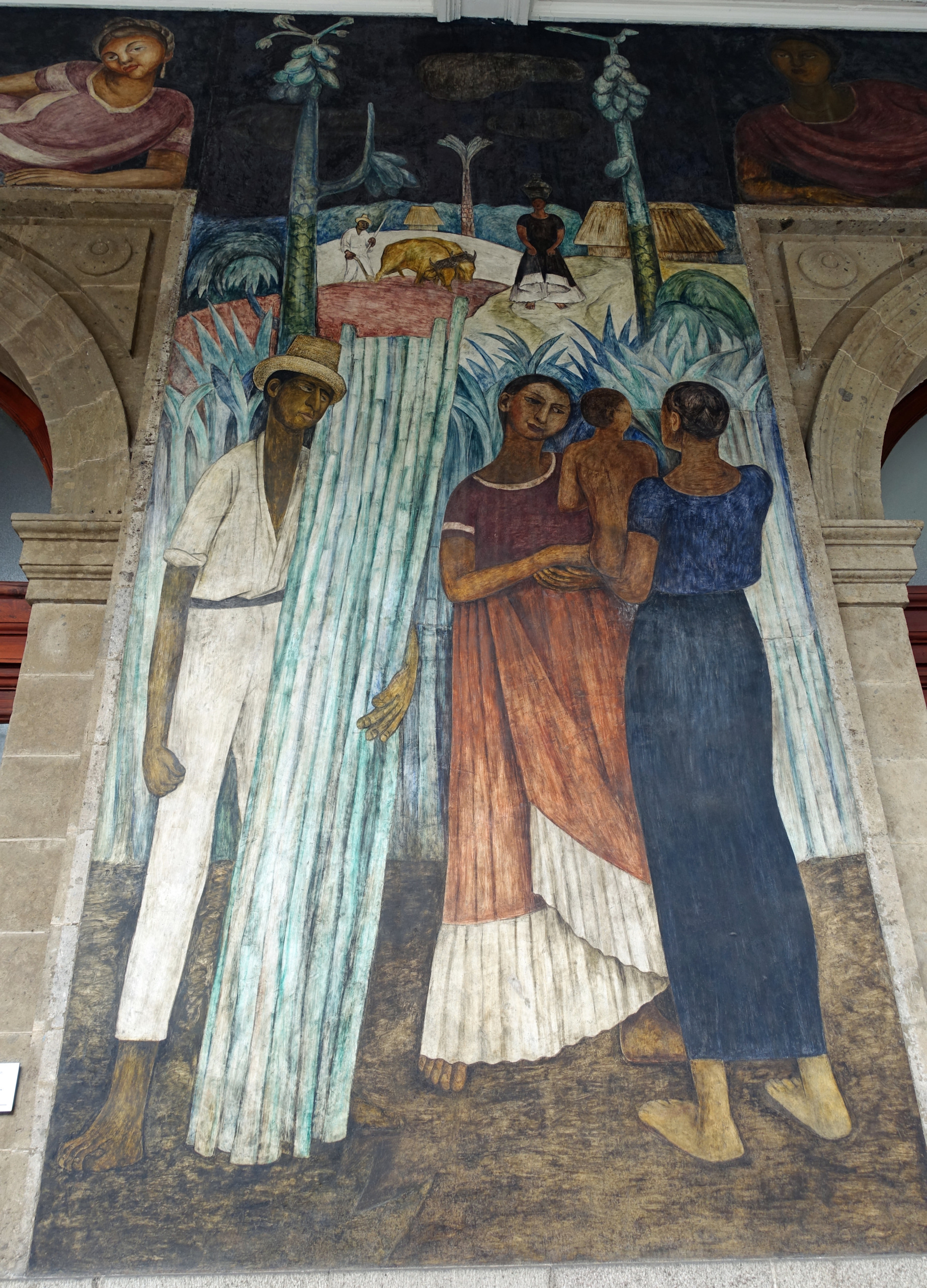
Because our apartment was just at 20 min walk from the historic center we walked there many times. Stumbling upon street markets and non tourist streets, because we got lost or because the subway station we wanted was closed so we ended up at the next one! That is one thing we found frustrating, the subway and bus lines being shut down either for demonstrations or events, meaning we ended up not where we planned or we had one hour walks to get ourselves back home. This was partly due to our timing because unbeknownst to us two of the biggest demonstrations occurred during the two weeks we were here. Overall we enjoyed exploring the historic center of Mexico City and typically went out early in the mornings because with 22 million people living here, things got crazy busy as the day went on.